
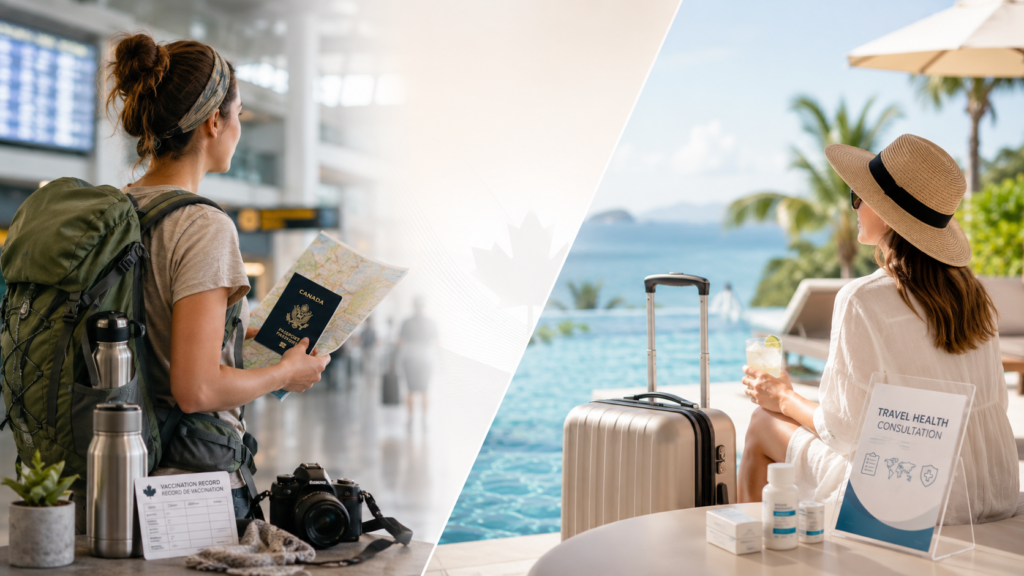
Backpacking vs Luxury Resort travel may take you to the same country, but the health risks and vaccination needs can be very different. A backpacker sleeping in hostels, using local transport, and visiting rural areas may face more exposure than a couple staying at a luxury resort with a fixed itinerary.
Your destination matters, but your travel style matters too.
A two-week resort stay with guided tours may involve lower exposure to unsafe food, rural mosquitoes, stray animals, and delayed medical care.
A backpacking trip, on the other hand, may include street food, overnight buses, rural guesthouses, jungle treks, animal encounters, and last-minute route changes.
These differences can affect which backpacker travel vaccines, boosters, high-risk travel vaccines, and malaria prescriptions should be discussed before departure.
Comparing Backpacking vs Luxury Resort travel helps you build a vaccination plan that reflects how you will actually travel, not just the country listed on your ticket.
Quick Answer
Backpacking vs Luxury Resort travel can lead to different vaccination needs because the level of exposure is not the same. Backpackers may spend more time in hostels, rural areas, local transport, street-food settings, and mosquito-prone locations, so they may need a broader review of vaccines and malaria prescriptions.
Luxury resort travellers may face lower exposure, but they can still need routine vaccines, destination-specific protection, and advice based on excursions, entry requirements, and personal health history.
Why Travel Style Changes Vaccination Needs
Many travellers think vaccine advice is based only on the country they are visiting. In reality, travel health advice is more detailed than that.
Two people can both travel to Thailand, India, Costa Rica, or Peru and still need different recommendations. One person may stay in a five-star resort with filtered water and scheduled day trips.
Another may spend six weeks moving between hostels, local buses, rural villages, beaches, farms, temples, and trekking routes.
That second traveller may face more exposure. This is where travel style-based vaccination becomes important.
A travel consultation usually considers:
- Destination and exact regions visited
- Trip length
- Travel season
- Rural vs urban travel
- Type of accommodation
- Food and water exposure
- Animal contact
- Mosquito exposure
- Planned activities
- Medical conditions
- Current vaccine history
- Access to medical care during the trip
The Public Health Agency of Canada advises travellers to consult a healthcare provider or travel health clinic as early as possible, ideally at least 4 to 6 weeks before travel, so there is enough time to complete recommended vaccine schedules. Even last-minute travellers are still encouraged to get pre-travel advice.
This matters because some vaccines need more than one dose. Others need time for the body to build protection.
Some trips may also require prescriptions instead of vaccines, such as malaria prevention tablets or medication for travellers’ diarrhea.
Destination is only one part of the risk
A destination can tell us which infections may be present in a country or region. But it does not always tell us how likely you are to be exposed.
For example, a person staying mostly at a beach resort may have lower food and water exposure than someone eating daily from local markets.
A backpacker riding local buses and staying in rural areas may have more chances of mosquito bites, injuries, animal contact, or difficulty reaching medical care.
This does not mean luxury resort travellers are risk-free. It simply means the risk profile is different.
Resort travellers may still need:
- Routine vaccine updates
- Destination-specific vaccines
- Mosquito bite prevention
- Yellow fever certificate review where required
- Food and water safety advice
- Travel medication planning
- Advice for excursions outside the resort
Backpackers may need a deeper review because the trip is often longer, less predictable, and more exposed to local environments.
Backpacker vs resort traveller risk profile
Backpacker vs resort traveller risk profile comparing accommodation, food, mosquitoes, animals, and medical access
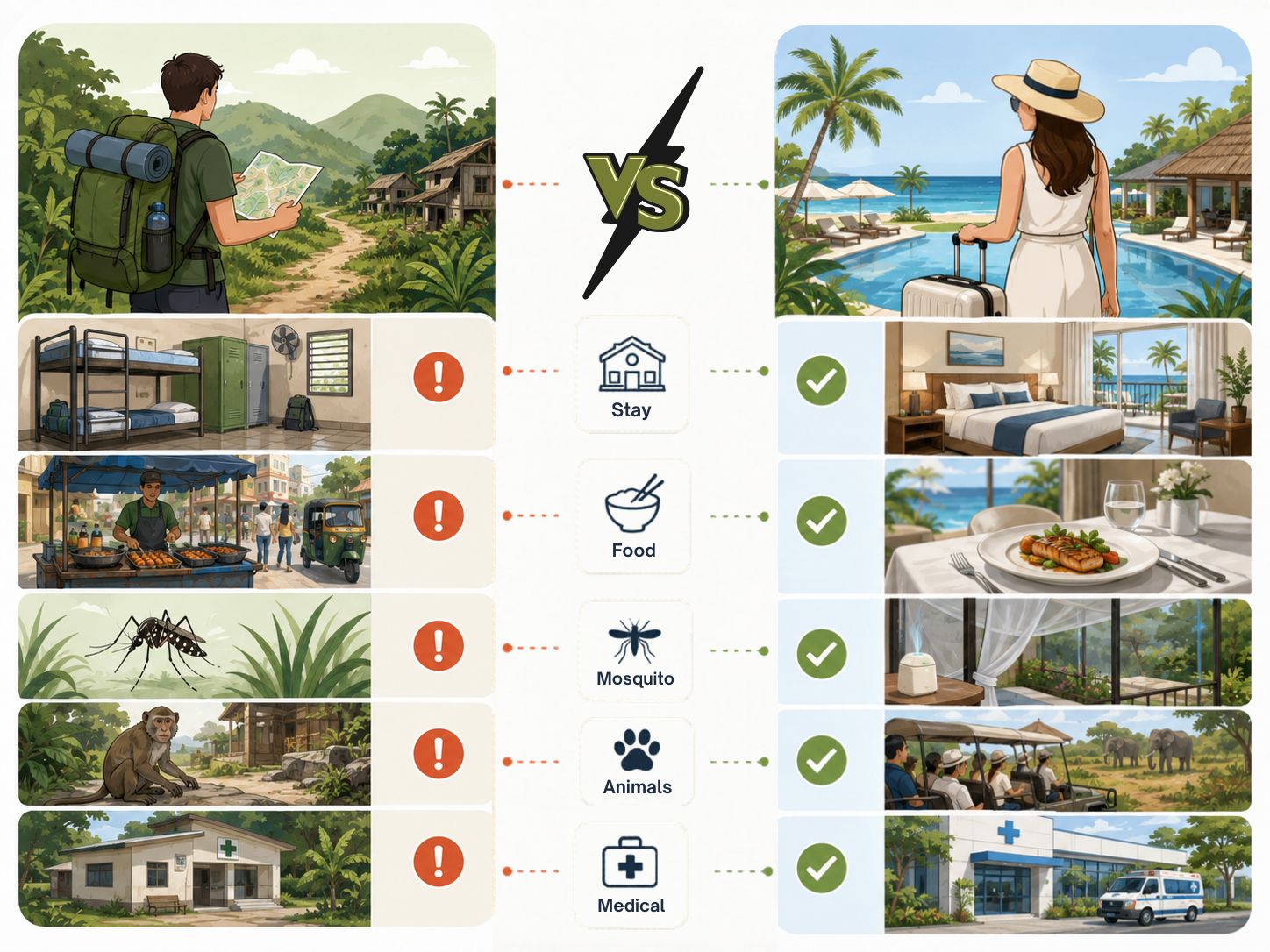
The table below shows how travel style can change health risks and vaccine discussions.
| Travel Factor | Backpacking Trip | Luxury Resort Trip |
|---|---|---|
| Accommodation | Hostels, guesthouses, rural stays, budget rooms | Hotels, resorts, private villas |
| Food exposure | Street food, local markets, shared kitchens | Resort dining, hotel restaurants |
| Route | Flexible, multi-city, rural or remote stops | Fixed itinerary, tourist zones |
| Trip length | Often several weeks or months | Often one to two weeks |
| Animal exposure | Higher risk with dogs, monkeys, farms, rural areas | Lower risk, but possible during excursions |
| Mosquito exposure |
Higher with outdoor travel, trekking, rural stays | Depends on region, resort location, and season |
| Medical access | May be delayed or limited | Usually easier in tourist areas |
| Vaccine planning | Often broader and more detailed | Usually destination-based plus excursion-based |
This is why backpacker travel vaccines are often planned differently from resort travel vaccines. The goal is not to over-vaccinate. The goal is to match protection to real exposure.
A backpacker moving through rural areas may need to discuss high-risk travel vaccines such as rabies, Japanese encephalitis, hepatitis B, or yellow fever, depending on destination and activities.
A resort traveller may not need all of these, but may still need hepatitis A, typhoid, routine boosters, or mosquito-related advice depending on the trip.
Backpacker Travel Vaccines | Why Backpackers Often Need Extra Protection
Backpacking usually comes with more freedom, but it can also involve greater health risks. A backpacker may stay longer, move through several regions, eat in local markets, use public transport, sleep in shared rooms, and visit rural or remote areas.
That is why Backpacking vs Luxury Resort travel are often reviewed more carefully than vaccines for a short resort trip.
This does not mean backpacking is unsafe. It means the planning needs to match the trip.
A traveller spending two months across Southeast Asia or South America may need a different vaccine plan than someone staying at one beach resort for one week.
Longer trips create more exposure
The longer you travel, the more chances you may have for food, water, mosquito, animal, and injury-related exposure.
For example, a backpacker may:
- Eat street food more often
- Drink beverages with ice from uncertain water sources
- Stay in rural guesthouses
- Ride overnight buses or shared local transport
- Visit farms, temples, wildlife areas, or trekking routes
- Have more contact with stray dogs, monkeys, or other animals
- Spend evenings outdoors where mosquito exposure may be higher
- Find it harder to access medical care quickly
Common travel vaccines for backpackers
The table below gives a simple overview of common travel vaccines for backpackers. It is not a personal vaccine plan.
A travel consultation is still needed because recommendations change by country, region, season, health history, and trip details.
| Vaccine or Prevention Topic |
Why It May Matter for Backpackers |
Higher-Risk Travel Situations |
|---|---|---|
| Hepatitis A | Can spread through contaminated food or water | Street food, local markets, rural stays |
| Typhoid | Linked with contaminated food and drinks | South Asia, rural areas, long backpacking trips |
| Hepatitis B | Spread through blood and body fluids | Long trips, medical care abroad, tattoos, piercings, new sexual contact |
| Rabies | Spread through bites or scratches from infected animals | Dogs, monkeys, bats, rural travel, animal contact |
| Japanese Encephalitis |
Mosquito-borne illness in parts of Asia | Rural Asia, farming areas, long stays, outdoor evenings |
| Yellow Fever | May be a risk or entry requirement in some countries | Parts of Africa and South America |
| Meningococcal vaccine |
May be required or recommended for certain regions or events | Hajj/Umrah, meningitis belt, crowded settings |
| Malaria prescriptions |
Malaria prevention usually involves tablets, not a vaccine | Rural areas, jungle travel, high-risk regions, longer stays |
When resort travellers still need vaccines
Resort travellers may still need a vaccine review when:
- Routine vaccines are not up to date
- The destination has food or water disease risk
- Yellow fever proof is required
- The trip includes jungle, safari, or rural excursions
- The traveller is older, pregnant, immunocompromised, or has chronic health conditions
- There are cruise stops in multiple countries
- The traveller plans to eat outside the resort
- There may be animal contact during tours
- Mosquito-borne illness is common in the region
Malaria Prescriptions | Why They Depend on Route, Season, and Travel Style
Malaria prevention is one of the clearest examples of why travel style matters.
There is no single malaria checklist that works for every traveller. Two people can visit the same country and receive different advice because malaria risk can vary by region, altitude, season, rural exposure, and type of accommodation.
For some trips, mosquito bite prevention may be enough. For other trips, malaria prescriptions may be recommended.
Malaria prevention is not just a vaccine checklist
Many travellers ask, “Do I need a malaria vaccine?” In most travel consultations, malaria prevention usually means prescription tablets plus mosquito bite prevention, not a routine travel vaccine.
The CDC advises travellers to check whether malaria spreads in the country or region they are visiting and to take malaria prevention medicine exactly as prescribed, including before travel and after returning when required.
This is important because malaria medications are not all taken the same way. Some may start one to two days before entering a malaria-risk area. Others may need to start earlier. Some continue for seven days after leaving the area, while others continue longer.
A pharmacist or travel health professional may ask about:
- Exact countries and regions
- Rural vs city travel
- Travel dates and season
- Type of accommodation
- Nighttime outdoor exposure
- Trekking, camping, or jungle travel
- Pregnancy or pregnancy plans
- Kidney, liver, or mental health history
- Current medications
- Previous side effects from malaria tablets
- Allergies
This is why malaria prescriptions should be planned around the actual route, not just the destination name.
When Should You Book Backpacker Travel Vaccines?
The best time to book backpacker travel vaccines is usually 6 to 8 weeks before departure. This gives enough time to review your destination, check vaccine records, complete multi-dose vaccines if needed, and plan any travel-related prescriptions.
For backpackers, timing matters even more because the trip may involve more than one country, rural areas, long stays, and changing routes. A last-minute plan can still help, but an early consultation gives more room to make safer decisions.
Ideal timing: 6 to 8 weeks before travel
Some vaccines need time to work. Others may require more than one dose. Rabies, hepatitis vaccines, Japanese encephalitis, and some other travel vaccines may need planning depending on your risk and schedule.
Booking early also helps you:
- Review old vaccine records
- Catch up on routine boosters
- Discuss destination-specific vaccines
- Ask about malaria prescriptions
- Plan for travellers’ diarrhea
- Review medication interactions
- Understand side effects before departure
- Arrange follow-up doses if needed
The Government of Canada advises travellers to consult a healthcare provider or travel health clinic preferably 6 weeks before travel because some vaccines need several weeks to become effective or may require more than one dose.
Prosper Pharmacy24 travel services
At Prosper Pharmacy24 in Surrey, BC, travellers can get guidance based on destination, travel style, and health needs. Whether you are backpacking through multiple countries or booking a luxury resort, your trip deserves a plan that matches real exposure.
Prosper Pharmacy24 can help travellers discuss:
- Travel vaccination needs
- Travel vaccine timing
- Malaria prescriptions
- Destination-specific risks
- Yellow fever vaccine planning
- Rabies risk for animal exposure
- Food and water safety
- Medication and allergy considerations
- Travel health questions before departure
If your trip includes rural areas, long stays, local food, hostels, outdoor activities, or mosquito-heavy regions, book early. If your trip is last minute, still reach out. A shorter consultation is better than no planning at all.
FAQs
Do backpackers need different vaccines than resort travellers?
Often, yes. Backpackers may need a more detailed vaccine review because they usually have longer trips, flexible routes, rural stops, hostel stays, street food exposure, mosquito exposure, and possible animal contact. Resort travellers may have lower exposure in some areas, but they still need destination-based advice. The safest plan is based on travel style, not just the country name.
What vaccines do backpackers usually need?
Common travel vaccines for backpackers may include hepatitis A, typhoid, routine boosters, and sometimes hepatitis B, rabies, Japanese encephalitis, yellow fever, or meningococcal vaccine. The right choice depends on the destination, trip length, rural travel, food and water exposure, animal contact, and medical history. A travel consultation can help decide which vaccines are relevant.
Do luxury resort travellers need travel vaccines?
Yes, some resort travellers still need travel vaccines. A resort stay may reduce certain risks, but it does not remove destination-specific diseases, mosquito exposure, routine vaccine gaps, or entry requirements. Resort travellers may also book local food tours, safaris, jungle trips, cruises, or animal encounters. These activities can change vaccine and prescription needs.
Do I need malaria prescriptions for backpacking?
You may need malaria prescriptions if your route includes malaria-risk regions. The decision depends on the country, exact region, season, altitude, rural travel, accommodation, and outdoor exposure. Backpackers often need a route-specific review because they may visit several areas in one trip. Mosquito bite prevention is also important, even when medication is prescribed.
How early should I get backpacker travel vaccines?
Try to book a travel consultation 6 to 8 weeks before departure. This gives time for vaccine schedules, booster review, malaria planning, and follow-up doses when needed. If your trip is last minute, still book advice as soon as possible. Some vaccines, prescriptions, and prevention steps may still be useful close to travel.
Which is higher risk: backpacking or a luxury resort?
Backpacking is usually higher risk because it often includes longer stays, local transportation, hostels, rural routes, street food, outdoor activities, and less predictable access to medical care. Luxury resort travel may be lower risk, but it is not risk-free. Excursions, mosquitoes, entry rules, and routine vaccine gaps can still matter.
Can I get travel vaccines and malaria prescriptions at Prosper Pharmacy24?
Yes. Prosper Pharmacy24 offers travel consultation and vaccination services in Surrey, BC. Travellers can discuss destination risks, vaccine options, travel medications, malaria prescriptions where appropriate, and practical safety planning before departure. Bring your itinerary, vaccine records, medication list, and travel dates to help the pharmacy team guide you more accurately.
Conclusion
Backpacking vs Luxury Resort travel should be planned around how you travel, not just where you travel.
A backpacker staying in hostels, eating local food, visiting rural areas, and changing routes may need a different vaccine and prescription plan than someone staying at a luxury resort.
The key idea is simple: travel style changes exposure.
Backpacking may increase risk through longer stays, street food, public transport, animal contact, mosquito exposure, and delayed access to care. Resort travel may reduce some of those risks, but it can still involve destination-specific vaccines, excursions, entry requirements, and malaria prevention.
Before you travel, ask better questions:
- Where exactly am I going?
- How long will I stay?
- Will I visit rural areas?
- Will I eat outside the resort?
- Will I be outdoors at night?
- Could I be exposed to animals or mosquitoes?
- Do I need vaccines, boosters, or malaria prescriptions?
If you are preparing for international travel from Surrey, BC, Prosper Pharmacy24 can help you review your destination, travel style, vaccine history, and prescription needs. Book early when possible, especially for backpacking or high-risk travel, so your trip begins with more confidence and fewer unknowns.
About the Health Experts Meet the team behind this article

Written by: Prosper Pharmacy24 editorial team
The editorial team prepares general health and pharmacy-related content to help readers better understand topics such as medications, vaccinations, travel health, and everyday pharmacy care. Our content is developed with a patient-friendly approach and is intended for educational purposes only.

Medically reviewed by - Dr. Anant Mrar, R.Ph.
He is a registered pharmacist in British Columbia. He provides professional input on selected health content to help ensure the information is clear, practical, and consistent with commonly available pharmacy and public health guidance at the time of publication. This content is for general education and should not replace personalized advice from a pharmacist, physician, or other healthcare professional.