
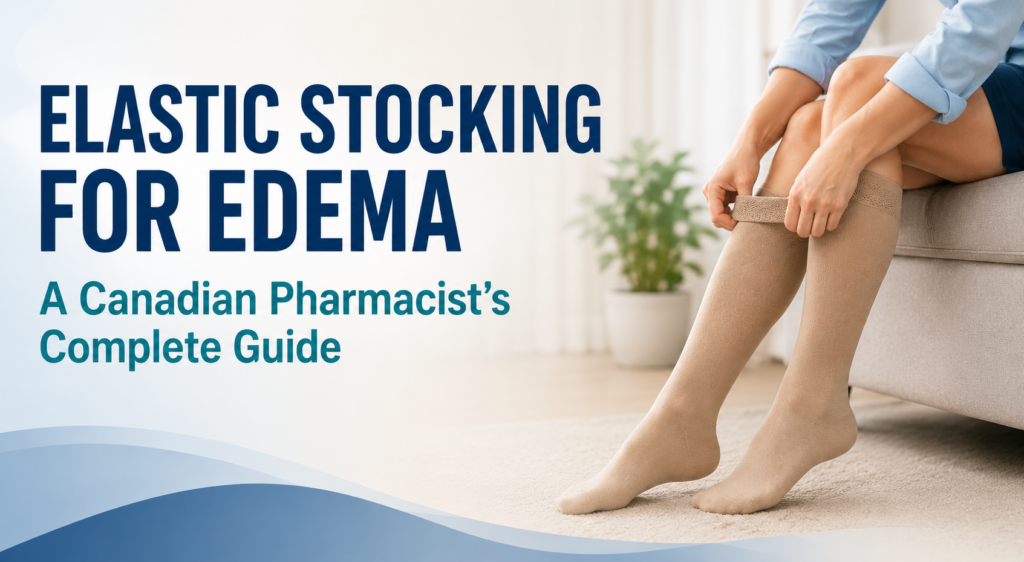
Edema means swelling caused by extra fluid trapped in the body’s tissues. It often affects the feet, ankles, calves, and lower legs. For many people, this swelling can make the legs feel heavy, tight, tired, or uncomfortable by the end of the day.
Choosing the right elastic stocking for edema can make daily walking, standing, and traveling more comfortable for people with leg swelling.
An elastic stocking for edema, also called a compression stocking, is designed to apply gentle pressure to the leg. This pressure helps support blood flow and may reduce fluid buildup in the lower legs.
However, not every stocking is the same. The right choice depends on the cause of swelling, the area affected, the compression level, and the correct size. Wearing the wrong size or pressure level may feel uncomfortable and may not give proper support.
Quick answer: Elastic stockings, also called compression stockings, may help mild to moderate leg edema by applying graduated pressure to the lower leg. This pressure is usually strongest at the ankle and lighter higher up the leg, which may support blood flow and reduce fluid buildup.
For mild swelling, 15–20 mmHg may be enough. For more noticeable edema, 20–30 mmHg is often used with pharmacist or healthcare guidance. Stronger compression, such as 30–40 mmHg, should usually be used only with medical advice.
Do not guess if swelling is sudden, painful, one-sided, red, warm, or linked with chest pain or shortness of breath. Get medical help quickly.
What is edema, and why do elastic stockings help?
Edema is swelling that happens when extra fluid collects in body tissues. In the legs, this fluid commonly builds up around the feet, ankles, and calves.
You may notice that your socks leave deep marks, your shoes feel tighter, or your legs feel heavy after sitting or standing for a long time.
People who notice swelling during long flights or extended travel may also benefit from reviewing their travel health preparation before a trip.
Edema can happen for many reasons. Some people get mild swelling after long travel, pregnancy, hot weather, or long work shifts on their feet.
Others may have swelling linked to venous circulation problems, lymphedema, heart, kidney, or liver conditions, certain medications, or reduced movement.
Because the cause can vary, ongoing or sudden swelling should be checked by a healthcare professional.
Clinical evidence supports the use of compression stockings for venous symptoms and venous edema.
A consensus review published in Phlebology found moderately robust evidence for medical compression stockings in patients with venous symptoms and for prevention and treatment of venous edema.
Another review explains that graduated compression can support venous return and improve lymphatic drainage, which helps explain why these stockings are often used for swelling-related leg conditions.
For best results, the stocking must match the person’s leg measurements, swelling location, comfort needs, and medical condition.
If swelling is painful, sudden, one-sided, red, warm, or linked with shortness of breath, seek medical help right away.
Who Should Not Use Compression Stockings Without Medical Advice?
Compression stockings are not right for every type of leg swelling. Speak with a doctor, nurse practitioner, or pharmacist before using them if you have:
– Poor circulation or peripheral artery disease
– Diabetes with numbness or reduced feeling in the feet
– Open sores, wounds, ulcers, or fragile skin
– Severe leg pain
– Skin colour changes in the foot or toes
– New swelling in only one leg
– Swelling with redness, warmth, or tenderness
– Severe heart, kidney, or liver disease
– Shortness of breath, chest pain, or sudden worsening swelling
Compression should feel firm and supportive, not painful. Remove the stocking and ask for advice if you notice numbness, tingling, blue or pale toes, worsening pain, or deep marks that do not fade.
Compression levels explained — which mmHg for edema?
The compression level of an elastic stocking for edema should match the severity of swelling and the person’s comfort level.
When choosing an elastic stocking for edema, one of the most important things to understand is the compression level.
Compression is measured in mmHg, which means millimetres of mercury. In simple words, mmHg tells you how much pressure the stocking applies to your leg.
A lower number gives lighter support. A higher number gives stronger pressure. However, stronger compression is not always better.
The best level depends on your swelling, comfort, leg measurements, skin health, and the reason you have edema.
Most medical compression stockings use graduated compression, meaning the pressure is strongest near the ankle and gradually decreases higher up the leg.
This design helps support blood flow back toward the heart and may help reduce fluid buildup in the lower legs.
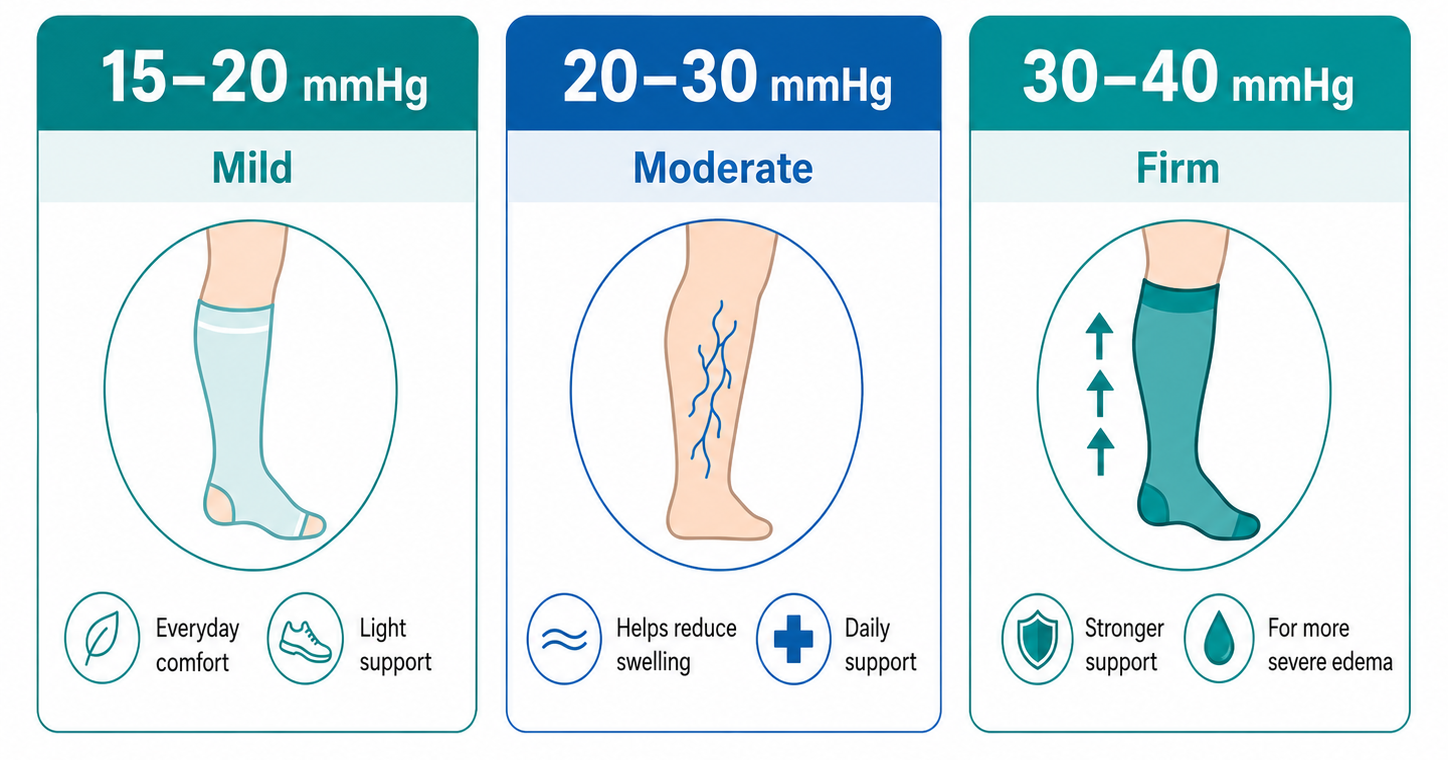
Here is a simple guide to common compression levels:
| Situation | Possible Stocking Type | Common Compression Range | Best Next Step |
|---|---|---|---|
| Mild ankle swelling after standing | Knee-high | 15–20 mmHg | Ask pharmacist for sizing help |
| Travel-related swelling | Knee-high travel compression | 15–20 mmHg | Measure before buying |
| Moderate daily swelling | Knee-high or thigh-high | 20–30 mmHg | Pharmacist or prescriber guidance |
| Varicose veins with swelling | Knee-high or thigh-high | 20–30 mmHg | Confirm fit and symptoms |
| Swelling above the knee | Thigh-high or waist-high | 20–30 mmHg or as advised | Medical guidance preferred |
| Lymphedema | Specialized garment | Varies | Custom fitting may be needed |
| Severe swelling or skin changes | Do not self-select | Varies | Medical assessment first |
| One-sided painful swelling | Do not self-treat | Not applicable | Seek urgent medical care |
This table is a starting point, not a diagnosis. The right compression level depends on the cause of edema, your leg measurements, skin health, circulation, comfort, and whether swelling is new or long-term.
For mild swelling, such as tired legs after standing at work or sitting during travel, 15–20 mmHg compression stockings may be enough. They can provide gentle support without feeling too firm.
For more noticeable swelling, 20–30 mmHg compression stockings are often used. This level may be suitable for people with moderate edema, varicose veins, or ongoing leg heaviness.
A pharmacist or healthcare provider can help you decide whether this level is appropriate.
30–40 mmHg compression stockings provide stronger pressure. They may be used for more serious venous edema or some lymphedema-related swelling, but they should not be chosen without professional guidance.
If the stocking is too tight or not fitted correctly, it can cause discomfort, skin irritation, or circulation problems.
Research comparing 15–20 mmHg and 20–30 mmHg compression stockings in people with lower-limb swelling has found that both levels can reduce edema, but comfort and tolerance are also important factors when choosing the right stocking.
Medical sources also explain that higher compression levels may carry more risk for people with certain conditions, so professional advice is important before using firm compression.
You should ask a pharmacist, doctor, or nurse practitioner before using compression stockings if you have diabetes, poor circulation, fragile skin, leg wounds, numbness, severe pain, or sudden one-sided swelling. Also seek urgent medical care if swelling is red, warm, painful, or comes with chest pain or shortness of breath.
Types of Elastic Stockings for Edema — Knee-High, Thigh-High, and Full-Length Options
Not all elastic stockings for edema are designed the same way. The right choice depends on where the swelling occurs, the cause of the edema, your comfort level, and any recommendations from your healthcare provider.
Choosing the correct stocking length can improve both comfort and effectiveness.
The best elastic stocking for edema depends on whether swelling is mainly in the ankle, calf, thigh, or the full leg.
Knee-High Compression Stockings
Knee-high stockings are the most commonly used type of compression stocking for edema.
They may be suitable for:
- Swelling in the feet, ankles, and calves
- Mild to moderate leg edema
- Long periods of standing or sitting
- Travel-related leg swelling
- Everyday use
Thigh-High Compression Stockings
Thigh-high stockings extend above the knee and provide compression throughout a larger portion of the leg.
They may be considered when:
- Swelling extends above the knee
- Compression support is needed throughout the entire leg
- A healthcare provider recommends additional coverage
- Certain venous circulation conditions affect the upper leg
Waist-High or Full-Length Compression Stockings
Waist-high stockings, sometimes called pantyhose-style compression stockings, provide support from the foot up to the waist.
They may be useful for:
- Swelling affecting both legs
- More widespread lower-body swelling
- People who prefer a single garment instead of two separate stockings
- Situations where compression is needed across the entire leg
Open-Toe vs Closed-Toe Compression Stockings
Many elastic stockings for edema are available in both open-toe and closed-toe styles.
Open-toe stockings may be preferred when:
- Toes feel cramped in regular stockings
- Extra airflow is desired
- Regular foot inspections are needed
- Sandals or certain footwear are worn
Closed-toe stockings may be preferred when:
- Full foot coverage is desired
- Additional warmth is preferred
- The stocking should feel more like a traditional sock
Lymphedema vs Venous Edema | Does the Type Matter?
The cause of swelling can influence the type of compression stocking that is recommended.
Venous edema is commonly caused by blood pooling in the legs due to reduced vein function. Many people with venous edema use standard graduated compression stockings to help support circulation and reduce swelling.
Lymphedema occurs when lymph fluid builds up because the lymphatic system is not draining properly.
In some cases, people with lymphedema may require specialized compression garments, custom fitting, or guidance from a healthcare professional experienced in lymphedema management.
For this reason, it is important to choose a compression stocking based not only on where swelling occurs but also on why the swelling is happening.
If you are unsure whether your edema is related to venous circulation, lymphedema, or another health condition, speak with a healthcare professional before selecting a compression product.
How to measure and size your compression stockings
Choosing the right size is one of the most important steps when buying an elastic stocking for edema. A stocking that is too loose may not provide enough support.
A stocking that is too tight may cause discomfort, skin marks, rolling, or pressure on sensitive areas.
A correctly sized elastic stocking for edema can provide support without feeling painfully tight.
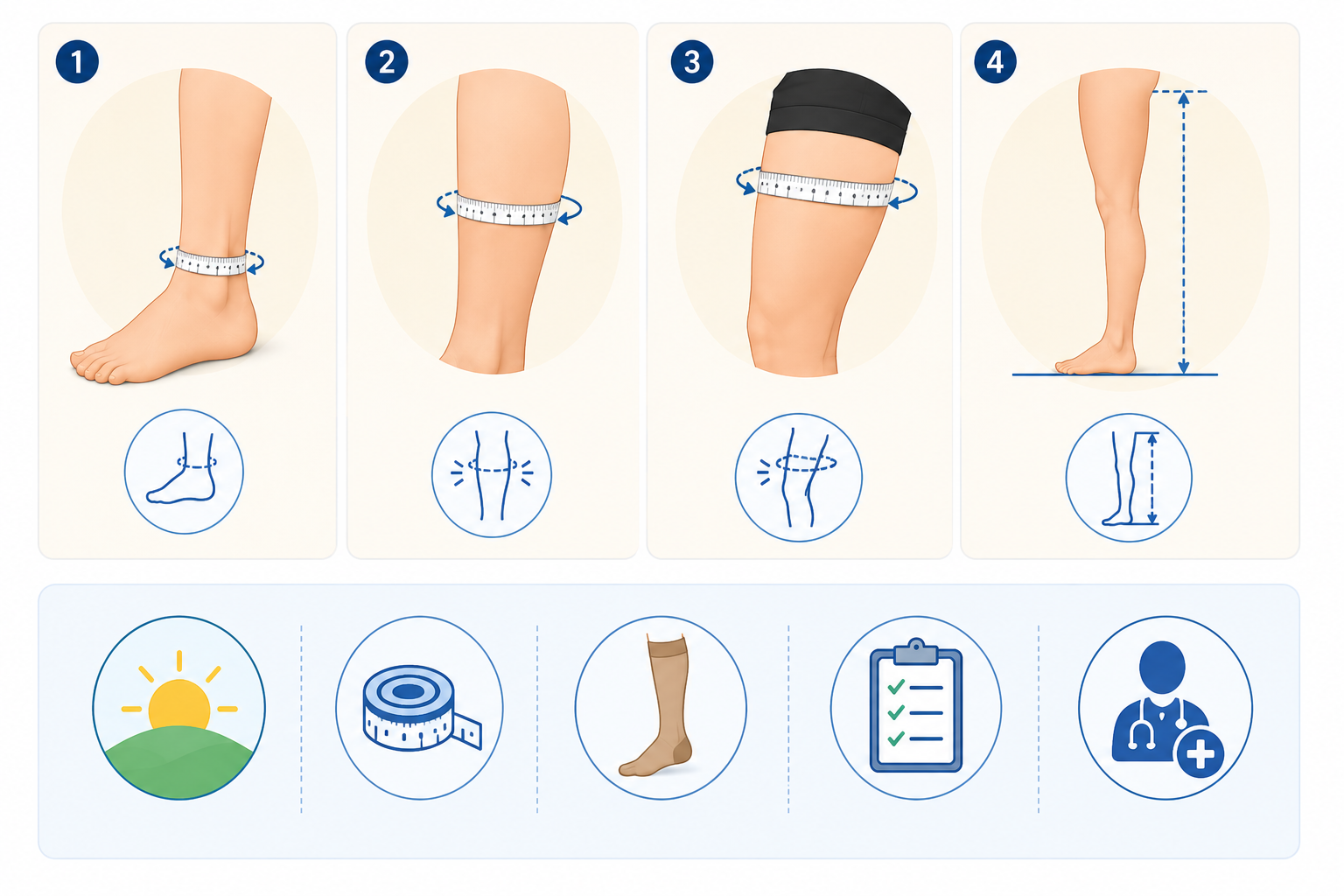
The best time to measure your legs is usually in the morning, before swelling becomes worse during the day. Use a soft measuring tape and measure directly against the skin.
Do not pull the tape too tightly. Most compression stocking brands use their own sizing chart, so your size may not be the same in every brand.
Always compare your measurements with the product’s official size guide before purchasing.
| Measurement Area |
How to Measure | Why It Matters |
|---|---|---|
| Ankle | Measure around the narrowest part above the ankle bone | Helps determine the main compression fit |
| Calf | Measure around the widest part of the calf | Helps prevent tightness, slipping, or rolling |
| Knee-high length |
Measure from the floor to the bend of the knee | Helps choose the correct height for knee-high stockings |
| Thigh | Measure around the widest part of the thigh | Needed for thigh-high stockings |
| Full leg length | Measure from the floor up to the top of the thigh or waist, depending on garment type | Helps with full-length or pantyhose-style stockings |
If you are unsure about your size, bring your measurements, prescription, or benefit details to Prosper Pharmacy 24 in Surrey, BC.
Our pharmacy team can help you understand sizing options and choose a stocking that feels supportive without being uncomfortable.
Tips for wearing and caring for your elastic stocking
To get better results from an elastic stocking for edema, it should be worn smoothly without folds or rolling.
Wearing an elastic stocking for edema correctly can make a big difference in comfort and results. If the stocking is twisted, folded, or rolled down, it may create pressure points and feel uncomfortable.
It is usually best to put your compression stocking on in the morning, before swelling increases.
Make sure your skin is dry, and gently smooth the fabric as you pull it up. The stocking should feel firm and supportive, but it should not cause pain, numbness, tingling, or skin colour changes.
Helpful donning tips include:
- Turn the stocking partly inside out before placing it over your foot.
- Pull it gently over the heel first, then slowly up the leg.
- Smooth out wrinkles with your hands.
- Avoid pulling from the top band only.
- Use rubber gloves or a stocking donner if it is difficult to put on.
- Do not fold or roll the top down, as this can create tight pressure.
If swelling is also affecting your movement or comfort, you may want to ask the pharmacy team about knee pain relief options and other supportive care products.
Compression stockings in Canada – coverage and where to buy
When buying an elastic stocking for edema in Canada, check the compression level, sizing chart, and insurance requirements before purchase.
If you are looking for an elastic stocking for edema in Canada, you can usually find medical compression stockings through pharmacies, medical supply stores, and some healthcare clinics. The best place to buy them is often somewhere that can help you understand compression levels, sizing, comfort, and whether you may need a prescription.
In Canada, coverage for compression stockings can vary. Some extended health insurance plans may reimburse compression garments when they are prescribed for a medical reason, but the rules depend on the plan, diagnosis, compression level, annual limit, and required documents.
Some plans may ask for a prescription from a physician or nurse practitioner, while others may also require an official receipt with product details.
For patients with lymphedema, coverage may have more specific requirements. The BC Lymphedema Association explains that compression reimbursement may require a prescription dated within the past 12 months, including details such as diagnosis, compression class, body part, quantity, and duration required.
Before buying compression stockings, it is helpful to check your benefit plan and ask what documents are needed. You may need:
- A prescription or written recommendation
- Diagnosis or medical reason
- Compression level, such as 20–30 mmHg
- Quantity required
- Product receipt
- Pharmacy or supplier details
If you need compression stockings in Surrey, BC, Prosper Pharmacy24 can help you explore available options, understand sizing, and choose a stocking that matches your comfort and support needs. Bring your prescription, insurance details, or previous stocking package if you have one. Our pharmacy team can guide you on what to ask your insurance provider before purchase.
FAQs
1. What is the best elastic stocking for edema?
The best elastic stocking for edema depends on where the swelling happens, how severe it is, and what is causing it.
Knee-high compression stockings are commonly used for swelling in the feet, ankles, and calves.
If swelling extends above the knee, a thigh-high or full-length option may be more suitable.
The right compression level and size are also important. A pharmacist or healthcare provider can help you choose a stocking that gives support without causing discomfort.
2. What compression level is usually used for edema?
For mild swelling, 15–20 mmHg compression may be enough. For moderate edema, 20–30 mmHg is commonly used when stronger support is needed.
Firm compression, such as 30–40 mmHg, should usually be used only with medical advice.
The correct level depends on the cause of edema, your skin condition, circulation, comfort, and whether you have other health concerns. Stronger compression is not always better if the fit or pressure is not appropriate.
3. Can I wear compression stockings all day?
Many people wear compression stockings during the day and remove them at night, unless a healthcare professional gives different instructions.
They are usually easier to put on in the morning before swelling increases. The stocking should feel firm, not painful.
Remove it and ask for advice if you notice numbness, tingling, pain, skin colour changes, or marks that do not fade. Your pharmacist or doctor can guide you on how many hours to wear it based on your condition.
4. Are compression socks and elastic stockings the same?
Compression socks and elastic stockings are similar, but they are not always the same. Medical elastic stockings are usually designed with measured pressure levels, such as 15–20 mmHg or 20–30 mmHg.
Some casual compression socks may only provide light support and may not be suitable for medical edema.
If you are buying compression wear for swelling, check the compression level, length, size chart, and product purpose before purchasing.
5. Can compression stockings help swollen ankles?
Yes, compression stockings may help swollen ankles by applying graduated pressure that supports blood flow and helps reduce fluid buildup in the lower leg.
They may be useful when swelling is related to long standing, sitting, travel, or venous circulation problems. However, sudden swelling in one ankle or leg, especially with pain, redness, warmth, or shortness of breath, should be checked urgently because it may signal a more serious condition.
6. Do I need a prescription for compression stockings in Canada?
Some lower-compression stockings may be available without a prescription in Canada.
However, a prescription may be needed for higher compression levels or if you want to submit the cost to an insurance plan.
Coverage rules vary by province, benefit provider, diagnosis, compression level, and required documentation. Before buying, check with your insurance provider and ask what information they need on the prescription and receipt.
If you are planning a long trip, it may also be helpful to review travel vaccines before your trip, especially if you are visiting destinations with specific health risks.
Conclusion
Choosing the right elastic stocking for edema can help support swollen legs when the fit, compression level, and stocking type are selected carefully.
The most important factors are the compression level, stocking length, proper size, comfort, and the reason behind the swelling.
Mild swelling may only need lighter compression, while more noticeable or ongoing edema may need stronger support and professional guidance.
If swelling is sudden, painful, one-sided, red, warm, or linked with shortness of breath, seek medical care right away.
At Prosper Pharmacy24 in Surrey, BC, our pharmacy team helps patients choose the right healthcare products with proper guidance. If you need an elastic stocking for edema, we can help you understand sizing, compression levels, and suitable options for your swelling and comfort needs.
About the Health Experts Meet the team behind this article
Written by: Prosper Pharmacy24 editorial team
The editorial team prepares general health and pharmacy-related content to help readers better understand topics such as medications, vaccinations, travel health, and everyday pharmacy care. Our content is developed with a patient-friendly approach and is intended for educational purposes only.

Medically reviewed by - Dr. Anant Mrar, R.Ph.
He is a registered pharmacist in British Columbia. He provides professional input on selected health content to help ensure the information is clear, practical, and consistent with commonly available pharmacy and public health guidance at the time of publication. This content is for general education and should not replace personalized advice from a pharmacist, physician, or other healthcare professional.