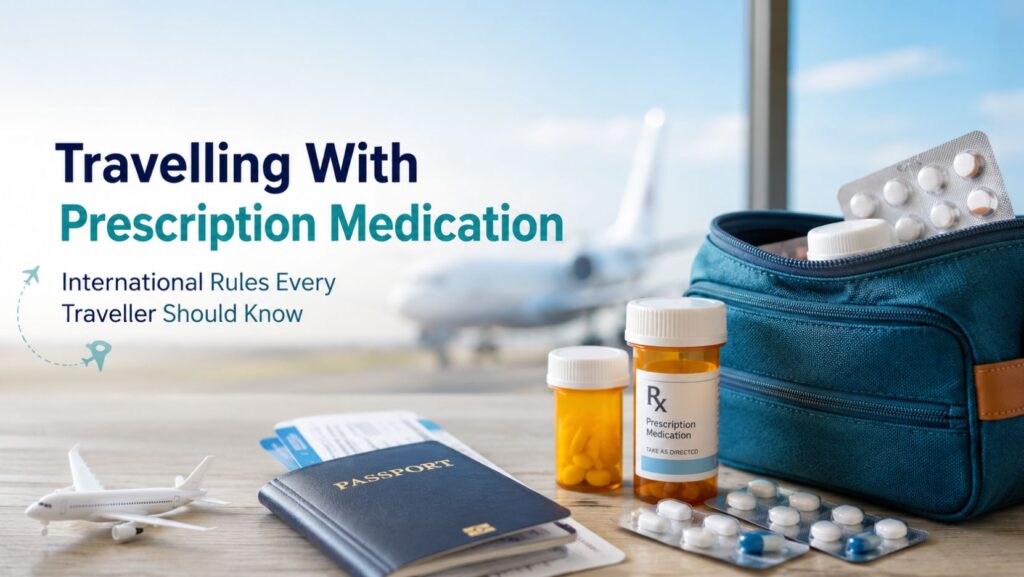
International travel takes careful planning, especially if you rely on prescription medication every day. While your medicine may be legal and commonly prescribed in Canada, the same medication could be restricted, require special documentation, or even be prohibited in another country. Understanding the rules before you travel can help you avoid delays, confiscation of medication, fines, or denied entry.
If you’re travelling with prescription medication, taking a few simple precautions such as carrying your medicines in their original pharmacy-labelled containers, bringing copies of your prescriptions, and checking destination-specific regulations can make your journey much smoother. Canadian travellers should also remember that transit countries may have their own medication rules, even if they are only changing planes.
Quick Answer
Most people can travel internationally with prescription medication if it is for personal use, kept in its original labelled pharmacy container, and supported by appropriate documentation when needed. However, travel medication rules vary widely between countries. Before departure, verify the medication laws for every destination and transit country, carry copies of your prescription, and consult your pharmacist if you take controlled medications.
Why Medication Rules Differ Between Countries
Every country has its own laws governing prescription drugs, controlled substances, and medicine imports. A medication that is routinely prescribed in Canada may require an import permit or be prohibited entirely elsewhere.
Medication regulations are designed to protect public health, prevent drug misuse, and control the importation of narcotics and other regulated substances. Because these laws differ from one country to another, international travellers are responsible for ensuring their medications comply with local requirements before they leave Canada. Before departure, check the Government of Canada guidance on travelling with medication and confirm the rules of every destination and transit country.
Some countries have particularly strict controls over medications containing stimulants, opioid pain relievers, sleeping tablets, or cannabis-derived ingredients. Others may require travellers to obtain advance approval or carry additional medical documentation.
Prescription Medication Rules by Destination
There is no single international standard for prescription medications. Each country decides which medicines are permitted, restricted, or prohibited, so travellers should always verify official requirements before departure.
A medication that is easy to obtain in Canada may require an import permit, additional documentation, or special approval elsewhere. If your itinerary includes connecting flights, remember that transit countries may also have medication rules that apply during your layover.
United States
Travelling between Canada and the United States is generally straightforward for people carrying prescription medication for personal use. However, travellers should still:
- Keep medications in their original pharmacy-labelled containers.
- Carry copies of prescriptions.
- Bring only a reasonable quantity for personal use.
- Follow airline and border security requirements.
Certain controlled substances may receive additional scrutiny during customs inspections.
Europe
Many European countries allow visitors to bring prescription medication for personal use, but some medicines containing narcotics or psychotropic substances may require extra documentation.
- Check the requirements for each country you plan to visit.
- Confirm rules for controlled medications.
- Carry prescriptions and, where appropriate, a doctor’s letter.
If you’re visiting multiple countries, remember that regulations can differ between neighbouring nations.
Asia
Several Asian countries have strict medication import laws.
Some destinations closely regulate:
- ADHD stimulant medications
- Opioid pain medications
- Sleeping tablets
- Anti-anxiety medications
- Certain cold medicines containing controlled ingredients
In some cases, travellers must obtain advance permission before arrival. Always consult the destination country’s official government or embassy website well before your departure date.
Middle East
Many countries in the Middle East have stringent rules regarding controlled medicines.
Travellers should pay particular attention if they take:
- Strong pain medications
- ADHD medications
- Benzodiazepines
- Certain psychiatric medications
Some countries require official approval before arrival, while others may prohibit specific medicines altogether. Never assume that a medication prescribed in Canada will automatically be accepted.
Australia and New Zealand
Australia and New Zealand generally permit travellers to carry prescription medication for personal use, provided documentation requirements are met.
You should:
- Carry medications in original labelled packaging.
- Bring copies of prescriptions.
- Declare medications if required by customs.
- Check quantity limits before travelling.
Biosecurity regulations are also strict in both countries, so always review official customs guidance before departure.
Medication and Customs Rules
Customs officers may inspect medications to confirm they comply with local laws. Honest declarations and proper documentation can help avoid unnecessary delays.
When medication must be declared
Some countries require travellers to declare prescription medication upon arrival, particularly if it contains controlled substances.
If you are unsure whether a declaration is required:
- Review the destination country’s customs guidance before departure.
- Complete declaration forms honestly.
- Keep prescriptions and supporting documents readily available.
- Answer customs questions accurately.
Failing to declare medication when required may result in delays, confiscation, fines, or other legal consequences depending on local regulations.
What customs officers may inspect
Border officials may ask to inspect your medication during routine screening.
They may check:
- Pharmacy labels
- Quantity carried
- Prescription documentation
- Doctor’s letter
- Import permits
- Medical devices associated with the medication
Most inspections are brief when travellers are well prepared.
Medication quantity limits
Many countries limit the amount of prescription medication visitors may bring.
Common limits may include:
- 30-day supply
- 60-day supply
- 90-day supply
However, there is no universal international standard. The permitted quantity depends on the destination country’s regulations and, in some cases, the type of medication involved. Controlled substances often have stricter limits than routine prescription medicines. Before travelling, verify the permitted quantity with the destination country’s official authorities.
Essential Documents You Should Carry
Keep prescription medication in its original pharmacy-labelled container and carry copies of your prescriptions. Some countries may also require a doctor’s letter or import permit, especially for controlled or injectable medicines.
Original pharmacy-labelled containers
Keep medications in the original container whenever possible. The label should show your name, medication, dosage, prescriber, and pharmacy details.
Avoid travelling with pills only in unlabelled containers or weekly organizers, as customs officers may ask for proof that the medication was prescribed to you.
Prescription copies and medication list
Carry a printed or digital copy of each prescription. It can confirm ownership, support emergency replacement, and help healthcare providers abroad.
For longer trips, also bring a medication list with:
- Brand and generic names
- Strength and dosage
- Reason for use
- Allergies
- Prescriber’s contact details
Doctor’s letter
A doctor’s letter may be helpful for controlled medications, injectables, medical devices, oxygen, refrigerated medicines, or larger supplies.
The letter should explain your condition, why the treatment is needed, and any related equipment or supplies.
Import permits
Some countries require advance approval for narcotics, ADHD stimulants, benzodiazepines, certain hormones, or injectable medications.
Check the official rules for both your destination and any transit countries before travelling.
How Prosper Pharmacy 24 Can Help Before Your Trip
International travel involves more than booking flights and packing luggage. If you take prescription medication, planning ahead can help reduce stress and avoid unnecessary complications at the border.
Before you leave Canada, Prosper Pharmacy 24 can help you:
- Review your current medications for travel readiness.
- Prepare an up-to-date medication list.
- Arrange prescription refills when appropriate.
- Explain proper storage and transportation of medications.
- Answer questions about travel health products and medication management.
- Provide personalized pharmacy guidance so you can travel with greater confidence.
Whether you’re travelling for business, vacation, study, or visiting family overseas, speaking with a pharmacist before departure can help ensure you’re prepared for a safe and uninterrupted trip.
Prescription Medication Travel Checklist
Before leaving Canada:
- List every prescription, over-the-counter medicine, and medical device you will carry.
- Check the rules for your destination and every transit country.
- Confirm whether any medicine is controlled, restricted or prohibited.
- Obtain an import permit or advance approval if required.
- Keep medicine in its original pharmacy-labelled container.
- Carry copies of your prescriptions using both brand and generic names.
- Ask whether you need a doctor’s letter.
- Confirm the permitted quantity for the length of your trip.
- Pack essential medicine in your carry-on baggage.
- Plan safe storage for refrigerated, injectable or temperature-sensitive products.
- Keep pharmacy, prescriber and travel-insurance contact details accessible.
- Recheck official requirements shortly before departure because rules can change.
Frequently Asked Questions
Can I travel internationally with prescription medication?
Yes. Most travellers can carry prescription medication for personal use if it is kept in its original pharmacy-labelled container and complies with the destination country's regulations.
Can I put prescription pills in a weekly organizer when flying?
Keep the main supply in its original pharmacy-labelled container. A pill organizer may be convenient during the trip, but unlabelled tablets can be harder to identify during an inspection. Check the rules of your destination and transit countries.
Do transit-country medication rules apply during a layover?
They may. A transit country can regulate medication even when you do not leave the airport. Confirm the rules for every stop on your itinerary.
Can my pharmacy refill my prescription early before international travel?
Possibly. It depends on the prescription, remaining authorized refills, medication type, provincial requirements and insurance rules. Contact your pharmacy well before departure so it can review the prescription and determine whether the prescriber or insurer must be contacted.
Are ADHD medications allowed in every country?
No. Many ADHD medications contain controlled substances and may be restricted or require special authorization in certain countries. Check the rules before travelling.
Can I travel with refrigerated medication such as insulin or a biologic?
Usually, but you should confirm airline, screening and destination requirements before travelling. Ask your pharmacist how to maintain the recommended temperature and carry supporting documentation for medication, needles or cooling equipment.
When should I speak with my pharmacist before travelling?
Ideally, schedule a consultation several weeks before departure. This gives you enough time to arrange refills, obtain documentation, and confirm any country-specific medication requirements.
Conclusion
Travelling internationally with prescription medication doesn’t have to be stressful, but it does require planning. While most medications can be taken abroad for personal use, laws differ from country to country, and some medicines may require additional documentation or prior approval.
Before your trip, confirm the latest travel medication rules, keep your medicines in their original labelled containers, carry copies of your prescriptions, and check whether customs declarations or import permits are required. If you’re travelling with prescription medication such as controlled substances, insulin, biologic medicines, or injectable treatments, allowing extra time to prepare can help you avoid unnecessary delays at the border.
Get Travel Medication Advice in Surrey
If you’re unsure about your medications or need personalized prescription travel advice, speaking with a pharmacist before departure can help ensure you travel safely and confidently. Proper preparation today can help prevent interruptions to your treatment tomorrow.
Need Help Travelling With Prescription Medication?
Speak with the Prosper Pharmacy 24 team about medication planning, travel health needs, required documents, and destination-specific considerations before your trip.
About the Health Experts Meet the team behind this article

Written by: Prosper Pharmacy24 editorial team
The editorial team prepares general health and pharmacy-related content to help readers better understand topics such as medications, vaccinations, travel health, and everyday pharmacy care. Our content is developed with a patient-friendly approach and is intended for educational purposes only.

Medically reviewed by - Dr. Anant Mrar, R.Ph.
He is a registered pharmacist in British Columbia. He provides professional input on selected health content to help ensure the information is clear, practical, and consistent with commonly available pharmacy and public health guidance at the time of publication. This content is for general education and should not replace personalized advice from a pharmacist, physician, or other healthcare professional.