
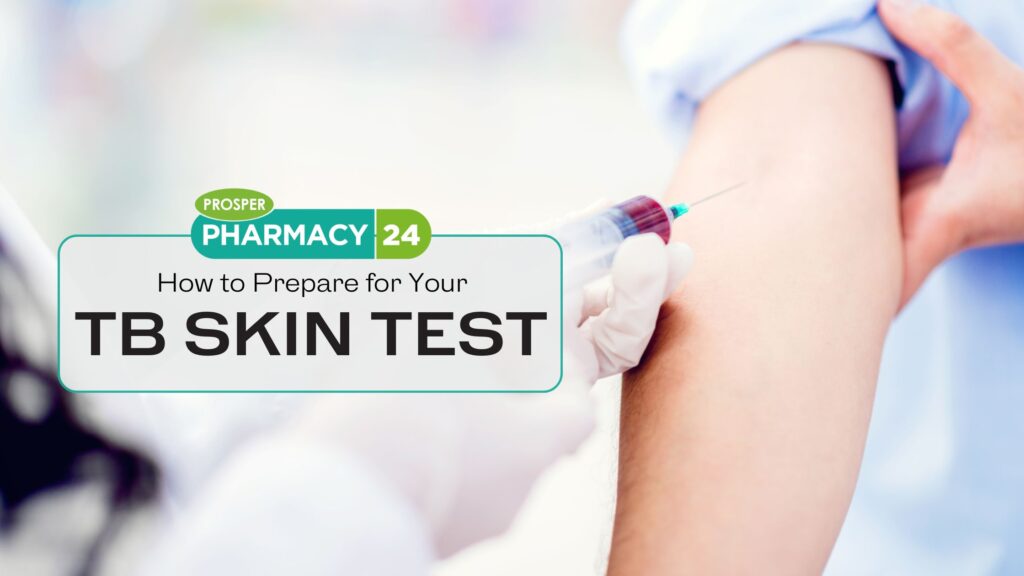
Are you feeling unsure about what to expect from a TB skin test? You’re not alone! Many people face this test with questions swirling in their minds:
“how to prepare for TB skin test ?” “Is it painful?” “What should I do beforehand?” “Will I need time off work?”
The good news is that with some preparation, you can confidently approach the test.
Whether this is your first test or you’ve had it before, this guide will walk you through everything you need to know.
We’ll cover practical tips, bust common myths, and ensure you’re ready to handle it like a pro.
Let’s start by understanding what a TB skin test really is and why it’s so important for your health.
Quick Answer:
A TB skin test usually requires two visits. During the first visit, a small amount of tuberculin is placed under the skin of your forearm. You must return 48–72 hours later so a trained healthcare provider can measure the firm raised area, not the redness. Bring any school, work, immigration, or facility forms, your vaccination history, and your BC Care Card if available.
Understanding the TB Skin Test
The TB skin test, also known as the Mantoux test, is a simple yet essential procedure used to detect tuberculosis (TB) infection.
But what exactly does it involve, and why might someone need it? Let’s break it down:
What Is the TB Skin Test?
The test involves injecting a small amount of a substance called purified protein derivative (PPD) just under the skin on your forearm.
After 48 to 72 hours, a healthcare professional examines the area for a reaction, which helps determine if you’ve been exposed to TB bacteria. [Source]
Why Is the Test Conducted?
The TB skin test is a screening tool, often used to:
Check for latent (inactive) TB in individuals at higher risk, such as healthcare workers, international travelers, or those with weakened immune systems.
Meet requirements for school, work, or immigration.
Who Should Consider Getting Tested?
Individuals who’ve been in close contact with someone diagnosed with active TB.
People living in or traveling to areas where TB is more common.
Those starting certain medications (like immunosuppressants) or undergoing medical procedures that may affect the immune system.
Healthcare workers and other professionals in high-risk environments.
Is It Safe?
Research shows that the TB skin test is safe for most people, with minimal risks like mild itching or swelling at the injection site (World Health Organization).
However, individuals with severe allergies to tuberculin or those who had adverse reactions in the past should inform their healthcare provider.
Pre-Test Preparation | How to Get Ready for Your TB Skin Test
Proper preparation is key to ensuring accurate results for your TB skin test. Here’s what you need to know and do before heading to your appointment.
1. Share Your Medical History with Your Healthcare Provider
Inform your healthcare provider about:
Any past TB skin test results, including any positive outcomes or allergic reactions.
A history of receiving the Bacillus Calmette-Guérin (BCG) vaccine, as it can sometimes affect test results (CDC on BCG and TB Testing).
Any current medications or health conditions that may impact your immune system, such as autoimmune disorders or recent chemotherapy.
This information helps the provider interpret the results accurately and determine if additional testing is required.
2. Plan Your Schedule
The TB skin test requires two visits:
Day 1: The injection is administered.
Day 2 or 3 (48-72 hours): The injection site is examined.
Ensure you’re available for both visits. Missing the follow-up can lead to an invalid test.
3. Discuss Medications and Supplements
Certain medications, like steroids or immunosuppressants, can suppress your immune response and affect test accuracy. Let your doctor know if you are on such treatments.
You might be advised to temporarily pause some medications before the test, but only under medical supervision.
4. Avoid Skin Irritants Before the Test
To prevent irritation at the injection site, avoid applying lotions, creams, or perfumes on your forearm.
Keep your skin clean and dry on the day of the test to avoid complications.
5. Relax and Stay Hydrated
While the test is quick and minimally invasive, staying calm and hydrated can ease the process. If you’re feeling anxious, consider bringing a friend or family member along for support.
Don’t Delay, Book Now! Schedule your TB skin test!
Pro Tip
If you have any upcoming medical procedures, such as vaccinations, it’s best to mention them to your provider.
Vaccines like the MMR (measles, mumps, and rubella) shot can interfere with test results if given too close to the TB skin test date. [Source]
Day of the Test | What to Expect and Post-Test Care
Being prepared for the day of your TB skin test ensures the process goes smoothly. Here’s a breakdown of what will happen and how to care for yourself afterward.
What to Expect During the Test
The Procedure: A small amount of purified protein derivative (PPD) will be injected just under the skin on your forearm.
The injection creates a small raised bump (called a wheal) at the site, which typically disappears within a few hours.
It is quick and relatively painless, often compared to a mosquito bite. Any discomfort is minimal and short-lived.
Time Required: The process takes only a few minutes, making it a simple in-and-out appointment.
Important Note: After the injection, you will need to return to the clinic within 48-72 hours for the healthcare provider to check the injection site for any reaction. Missing this follow-up makes the test invalid.
Post-Test Care: Dos and Don’ts
Taking care of the injection site is critical to avoid interference with the test results.
Do’s: Keep the area clean and dry.
If the site feels itchy, a cold compress can help alleviate discomfort without disrupting the test area.
Don’ts: Avoid scratching, rubbing, or pressing on the test site. Doing so can lead to irritation or incorrect results.
Do not apply lotions, creams, or bandages over the site.
What If You Experience Side Effects?
Side effects are rare but may include slight redness, swelling, or itching at the injection site.
If you experience severe reactions like extreme swelling or difficulty breathing, contact your healthcare provider immediately.
Need more information or ready to book your TB skin test? Visit our web page Tuberculosis Skin Test or visit our clinic today! [Google Map]
Interpreting Results and Next Steps
After your TB skin test, the most critical step is interpreting the results accurately and deciding on the appropriate course of action.
Here’s what you need to know about reading the results and what they mean for your health.
How Are TB Skin Test Results Interpreted?
Your healthcare provider will examine the injection site 48 to 72 hours after the test. The result depends on the size of the induration (the raised, hardened area), not the redness.
Negative Result: No significant swelling at the injection site indicates a negative result.
This means there’s no evidence of a TB infection.
Positive Result: A firm bump larger than a specific size (based on your risk factors) suggests a positive result.
A positive test doesn’t necessarily mean you have active TB—it could indicate latent TB. Further testing, such as a chest X-ray or sputum test, will be needed for confirmation.
Factors That Influence Result Interpretation
Risk Factors: A smaller induration may be considered positive in high-risk individuals (e.g., people with HIV or recent exposure to TB).
BCG Vaccination: If you’ve received the BCG vaccine, it might cause a false-positive result (CDC on BCG vaccine).
What Happens After a Positive Result?
Additional Testing: You may be referred for a chest X-ray or blood test (like the Interferon Gamma Release Assay or IGRA) to confirm or rule out active TB.
Treatment Options: Latent TB: Treatment usually involves antibiotics to prevent the infection from becoming active.
Active TB: A combination of medications is prescribed to treat the infection.
What If the Test Is Negative?
A negative result typically means no TB infection, but your healthcare provider may recommend repeat testing if:
You are at ongoing risk of exposure to TB.
There’s a chance of a false-negative result due to an immunocompromised state. [Source]
Book your TB skin test at Prosper Pharmacy24 in Surrey. Our pharmacy team can help with testing, follow-up reading, and required documentation.
Need a TB Skin Test?
Frequently Asked Questions
TB skin tests can feel a bit intimidating if you’re unfamiliar with the process. To help you feel more at ease, here are answers to some frequently asked questions:
How do I prepare for a TB skin test?
Plan for two visits: one for test placement and one 48–72 hours later for reading. Bring any required school, work, placement, or immigration forms.
Can I shower after a TB skin test?
Yes, you can shower. Do not scrub, scratch, or cover the test area. Gently pat it dry.
What should I avoid after a TB skin test?
Avoid scratching, rubbing, applying creams, lotions, ointments, or covering the area with a bandage.
What happens if I miss the 48–72 hour reading?
Your result may be invalid. In most cases, you will need to repeat the TB skin test.
Can BCG vaccination affect my TB skin test?
Yes, BCG vaccination can sometimes cause a false-positive result. Tell the pharmacist if you had BCG before.
Can I get vaccines around the same time as a TB skin test?
Yes, BCG vaccination can sometimes cause a false-positive result. Tell the pharmacist if you had BCG before.
Does a positive TB skin test mean I have active TB?
No. A positive result means further medical assessment may be needed. It does not always mean active TB.
What should I bring to a TB skin test appointment?
Bring required forms, vaccination history, past TB test records, current medication details, and your BC Care Card if available.
Conclusion
Preparing for a TB skin test doesn’t have to be stressful. By understanding the test, following pre-test and post-test guidelines, and knowing what to expect, you’re already setting yourself up for success.
If you have any doubts or concerns, don’t hesitate to reach out to your healthcare provider or visit our trusted team at Prosper Pharmacy 24.
About the Health Experts Meet the team behind this article
Written by: Prosper Pharmacy24 editorial team
The editorial team prepares general health and pharmacy-related content to help readers better understand topics such as medications, vaccinations, travel health, and everyday pharmacy care. Our content is developed with a patient-friendly approach and is intended for educational purposes only.

Medically reviewed by - Dr. Anant Mrar, R.Ph.
He is a registered pharmacist in British Columbia. He provides professional input on selected health content to help ensure the information is clear, practical, and consistent with commonly available pharmacy and public health guidance at the time of publication. This content is for general education and should not replace personalized advice from a pharmacist, physician, or other healthcare professional.