
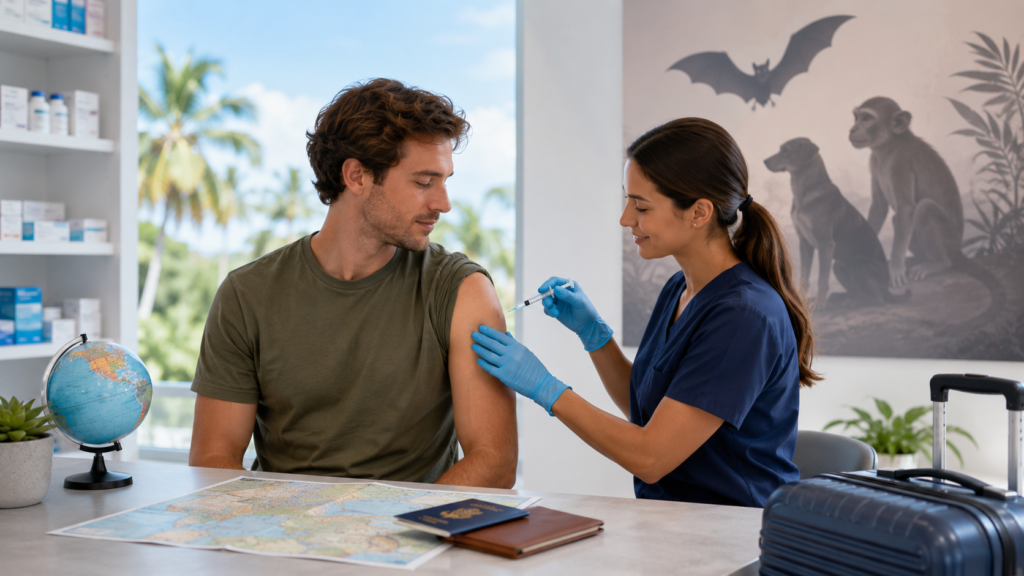
Planning an international trip usually means comparing flights, booking hotels, making packing lists, and saving restaurant recommendations.
But if your trip includes rural areas, outdoor activities, backpacking, wildlife experiences, or destinations where stray dogs and other animals are common. There is one important health question you should not ignore: What is the rabies vaccine price, and do you need the vaccine before you travel?
For many Canadian travellers, rabies vaccination is not the first thing they think about before leaving the country. It often becomes a concern only after reading travel advisories, hearing about animal bites abroad, or realizing that urgent medical care may not be easy to access in every destination.
A simple dog bite, monkey scratch, or unexpected animal contact can quickly turn into a stressful travel emergency if rabies protection has not been considered in advance.
Many travellers search for rabies vaccine price in Canada before booking a travel vaccine appointment because the cost can vary by clinic, province, and dose schedule.
This means the final cost may depend on how many doses are recommended, whether a travel consultation fee applies, your destination risk, your trip length, and whether your private insurance covers part of the vaccine.
Heading to a high-risk country? Protect yourself before you go.
Get expert advice on rabies vaccine timing and cost.
What Is Rabies?
Rabies is a serious viral infection that affects the central nervous system, including the brain and spinal cord. It is a zoonotic disease, which means it can pass from animals to humans.
The virus is usually transmitted through the saliva of an infected animal. Most commonly, this happens through a bite. It can also happen through scratches or when infected saliva enters broken skin, the eyes, nose, or mouth.
Rabies is preventable with proper vaccination and urgent care after exposure. However, once symptoms begin, the disease is extremely difficult to treat and is almost always fatal. This is why prevention is so important for travellers who may be exposed to animals in higher-risk regions.
Common animals linked with rabies risk include:
- Dogs
- Bats
- Monkeys
- Cats
- Foxes
- Raccoons
- Skunks
- Other infected mammals
For international travellers, dogs are often the biggest concern in many countries where rabies remains more common. The World Health Organization notes that dogs are responsible for up to 99% of human rabies cases worldwide.
This does not mean every dog is dangerous, but it does mean travellers should take animal contact seriously, especially in areas where stray dogs are common.
Why Does Rabies Spread?
Rabies spreads when the virus enters the body through infected saliva or nervous tissue. The most common route is an animal bite, but scratches and saliva contact with broken skin can also create risk.
A typical exposure may happen when a traveller: 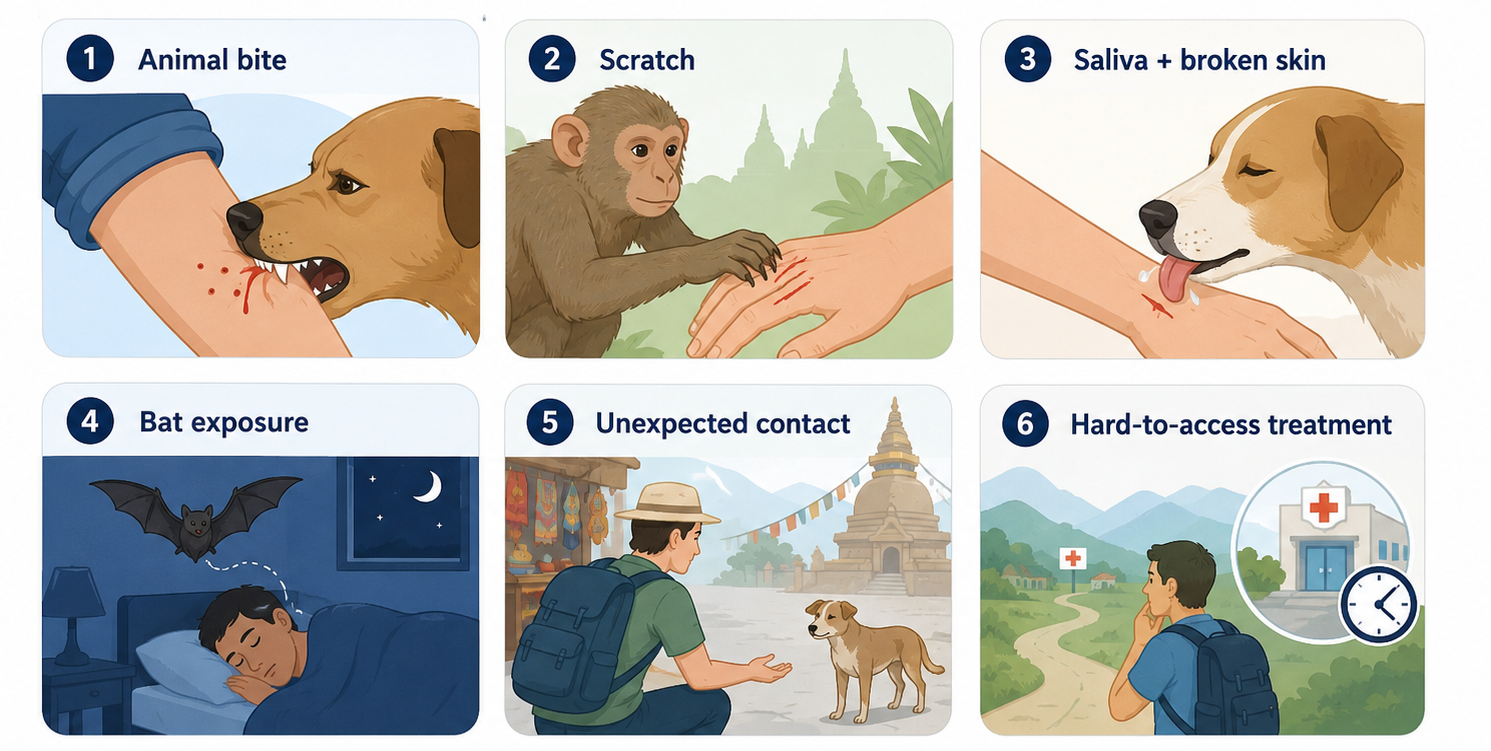
- Tries to feed or pet a stray animal
- Gets scratched by a monkey at a tourist site
- Is bitten by a dog while walking in a rural area
- Handles an injured animal without protection
- Wakes up after possible bat contact. Allows children to play with unfamiliar animals
One reason rabies remains a travel concern is that animal contact can happen unexpectedly. A traveller may not plan to touch animals, but a dog, monkey, or cat may approach them in a market, temple, beach area, village, hiking route, or hotel surroundings.
Who Should Consider the Rabies Vaccine Before Travel?
Not every traveler needs a rabies vaccine before every trip. A short hotel-based city trip may carry a different level of risk than a long backpacking journey, a rural family visit, or a volunteer project involving animals. That is why the decision should be based on your destination, activities, trip length, and access to medical care.
The rabies vaccine for travel is usually discussed when there is a higher chance of animal exposure or when getting urgent treatment abroad may be difficult.
To understand the risk factors, vaccine schedule, and who should consider vaccination, read our full guide on the rabies vaccine before travel.
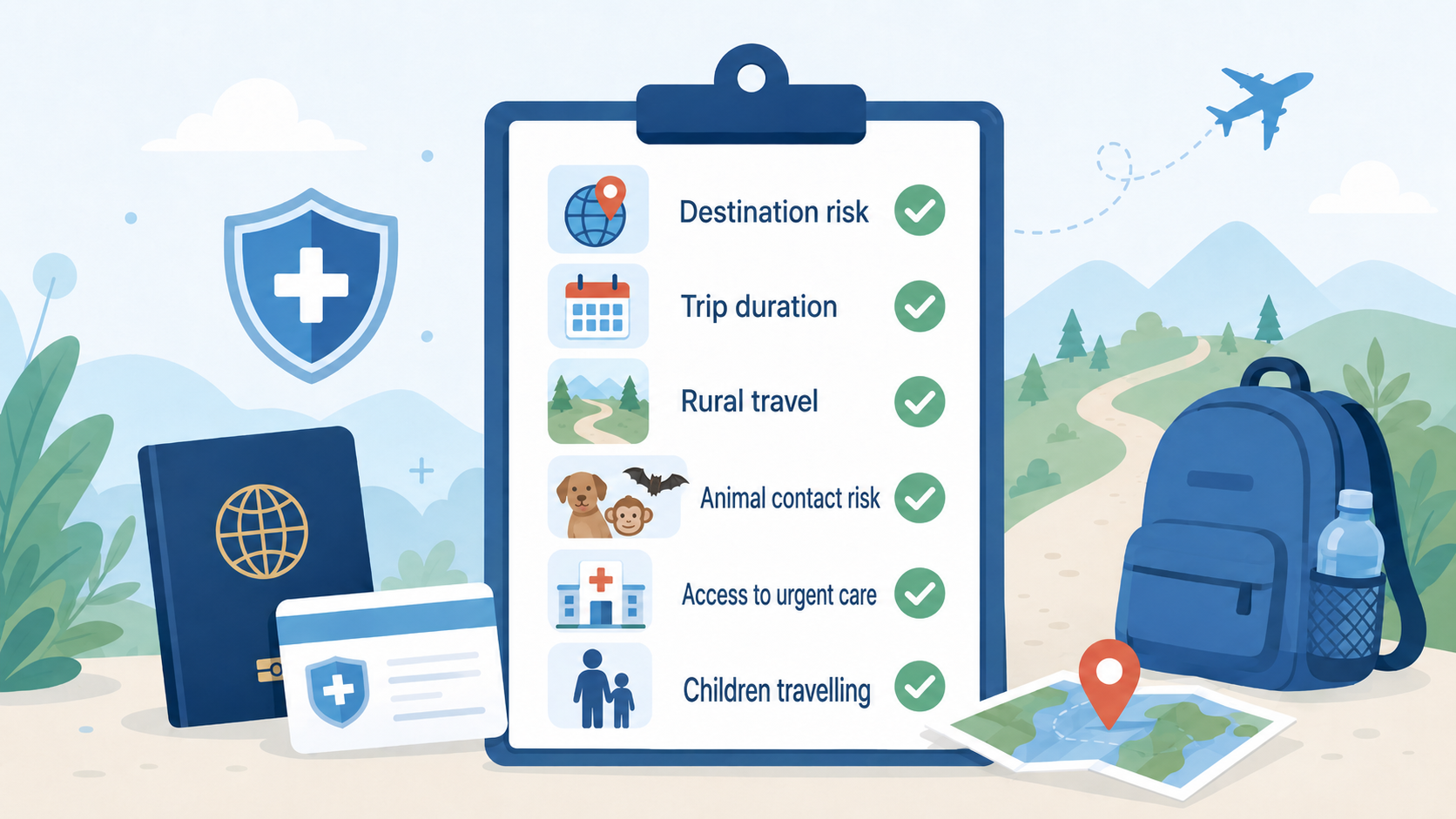
- Travelling to a country where rabies is more common
- Staying in rural or remote areas
- Going backpacking, hiking, camping, cycling, or doing adventure travel
- Visiting areas with many stray dogs, monkeys, bats, or other mammals
- Travelling for a long period
- Working, studying, or volunteering abroad
- Working with animals, wildlife, farms, shelters, or veterinary settings
- Travelling with children
- Visiting friends or relatives in smaller towns or villages
- Going somewhere where emergency medical care may be delayed or hard to access
Children deserve extra attention during travel planning. They may be more likely to touch animals, play near stray dogs or cats, or hide a small scratch because they feel scared.
Even a minor bite or scratch should be taken seriously.
A travel rabies vaccine Canada appointment can help you understand whether the vaccine is recommended for your specific trip.
The provider may ask where you are going, how long you will stay, whether you will visit rural areas, and whether you may be around animals.
Rabies Symptoms Travellers Should Know
Rabies symptoms do not usually appear immediately after a bite or scratch. That is part of what makes the disease so dangerous. A person may feel fine for days, weeks, or sometimes longer after exposure.
Early symptoms can look general and may be mistaken for another illness.
Early rabies symptoms may include:
- Fever
- Headache
- Weakness
- Fatigue
- General discomfort
- Pain near the bite area
- Tingling, prickling, or itching near the wound
As the infection progresses, symptoms become more serious because the virus affects the brain and nervous system. At this stage, rabies can cause neurological symptoms that are frightening and difficult to treat.
Later symptoms may include:
- Anxiety
- Confusion
- Agitation
- Hallucinations
- Trouble swallowing
- Excess saliva
- Fear of water
- Muscle spasms
- Paralysis
- Seizures
The most important thing to understand is this: rabies is not a disease where travellers should wait and watch for symptoms. Once symptoms appear, rabies is almost always fatal. Prevention and early medical care after exposure are the key.
This is why the rabies vaccine Canada guidance focuses so strongly on prevention, risk assessment, and urgent action after a possible exposure. The goal is to act before the virus reaches the nervous system and before symptoms develop.
Pre-Exposure Rabies Vaccine Canada vs Post-Exposure Treatment
When travellers ask about rabies vaccination, there are usually two different situations to understand: vaccination before possible exposure and treatment after possible exposure.
They sound similar, but they are not the same.

Post-exposure treatment is different. It happens after a possible rabies exposure, such as an animal bite, scratch, or saliva contact with broken skin. This is urgent medical care and should not be delayed.
What Is Pre-Exposure Rabies Vaccine Canada?
Before deciding based only on cost, it is helpful to understand whether you should get a rabies vaccine before traveling and how pre-exposure vaccination may change post-exposure care.
Pre-exposure rabies vaccine is given before a bite, scratch, or other possible contact with the rabies virus.
It is mainly about prevention and preparation. It is not meant for every traveller, but it may be recommended for people at higher risk.[soruce]
A healthcare provider may discuss the pre-exposure rabies vaccine if your trip includes:
- Rural or remote travel
- Long-term stays abroad
- Backpacking or outdoor adventure travel
- Animal-related work or volunteering
- Travel with children
- Areas where stray dogs, monkeys, bats, or other mammals are common
- Destinations where rabies post-exposure treatment may be delayed or difficult to access
Pre-exposure vaccination does not mean you can ignore an animal bite. Even vaccinated travellers still need medical advice after a possible exposure.
The difference is that pre-exposure vaccination may make the response after a bite simpler and more predictable.
That is why the decision should be made with a pharmacist, travel-health nurse, doctor, or travel clinic. Your provider can review your itinerary and decide whether the rabies vaccine before travel is worth it for your situation.
What Is Post-Exposure Rabies Treatment?
Post-exposure treatment is medical care given after a possible rabies exposure. This may be needed if a traveller is bitten, scratched, or exposed to saliva from an animal that could carry rabies.
A possible rabies exposure should be treated seriously, even if the wound looks small. Travellers should not wait to see symptoms.
Once rabies symptoms begin, the disease is almost always fatal, so treatment must happen before symptoms develop.
Post-exposure care may include wound cleaning, medical assessment, rabies vaccine doses, and sometimes rabies immune globulin, depending on the person’s vaccination history and the exposure situation.
The exact treatment depends on:
- Type of animal
- Country or region where exposure happened
- Whether the animal can be observed or tested
- Type of wound or contact
- Whether the traveller had rabies vaccine before
- Time since exposure
- Local public health or medical guidance
The key message is simple: if an animal bite or scratch happens abroad, seek medical help urgently.
When Should You Book a Travel Rabies Vaccine Appointment?
Timing matters. Rabies vaccination may require more than one dose, and other travel vaccines may also be recommended for your destination.
That is why travellers should not leave vaccine planning until the last few days before departure.
A good rule is to book a travel consultation several weeks before your trip. This gives your provider enough time to review your itinerary, check your vaccine history, and plan any doses you may need.
Canada’s travel-health guidance recommends contacting a travel health clinic or healthcare provider about six weeks before travel.
Even if your trip is soon, it is still worth booking an appointment because some advice and vaccines may still be useful.
How Much Is a Rabies Vaccine in Canada?
For pre-exposure rabies vaccination, each dose is usually billed separately because the vaccine is given over scheduled appointments rather than as a single visit.
Before starting the series, it is best to contact your travel vaccination clinic or pharmacy to confirm the latest rabies vaccine cost per dose, any consultation fees, and the total estimated cost for your recommended schedule.
The rabies vaccine price in Canada is usually listed per dose, which means the total cost may increase if multiple appointments are needed.
Rabies Vaccine Safety, Side Effects, and Practical Travel Tips
Rabies vaccination is used to help prevent one of the most serious viral infections affecting the nervous system.
Like other vaccines, it may cause mild side effects in some people. These usually do not last long, but travellers should still discuss their health history with a pharmacist, doctor, nurse, or travel-health provider before vaccination.
Common vaccine-related effects may include soreness, redness, swelling, or discomfort where the injection was given. Some people may also feel tired, achy, or generally unwell for a short time.
Serious reactions are uncommon, but any history of severe allergies or previous vaccine reactions should be shared before your appointment.
This is another reason a travel consultation matters. The provider can check whether the rabies vaccine before travel is suitable for you, whether timing works for your departure date, and whether other travel vaccines or medicines should be discussed at the same visit.
FAQs
I. Why does rabies vaccine price in Canada vary by clinic?
The rabies vaccine price in Canada varies by clinic, province, vaccine brand, consultation fee, and dose schedule. Current Canadian clinic examples often list the rabies vaccine cost per dose around $220–$315. The final cost may be higher if multiple doses are recommended.
II. What is the rabies vaccine cost per dose in Canada?
The rabies vaccine cost per dose is commonly listed separately from the full vaccine series. Some Canadian travel clinics list prices in the range of about $220–$315 per dose. Travellers should confirm the latest price directly with the pharmacy or clinic before booking.
III. Is rabies vaccine covered by insurance in Canada?
Travel-related preventive vaccines are often paid out of pocket. Some private insurance plans may reimburse part of the cost, but coverage depends on the plan. Ask your insurance provider whether travel vaccines, consultation fees, and rabies vaccine Canada costs are included.
IV. Do I need a rabies vaccine before travel?
You may need to discuss rabies vaccine before travel if you are visiting a higher-risk country, staying in rural areas, travelling for a long time, working with animals, backpacking, or travelling with children. A healthcare provider can assess your itinerary and risk.
V. Who should get the rabies vaccine for travel?
Rabies vaccine for travellers may be considered for people who have a higher chance of animal exposure or limited access to urgent medical care abroad. This can include backpackers, rural travellers, long-stay visitors, animal workers, volunteers, children, and adventure travellers.
VI. Where can I get a rabies vaccine travel clinic appointment in Canada?
You can discuss rabies vaccination at a travel clinic, travel-health pharmacy, doctor’s office, or another healthcare provider that offers travel vaccine services.
If the vaccine is for a possible bite or scratch that already happened, seek urgent medical care or public health guidance instead of booking a routine travel appointment.
VII. How many doses are needed for the pre-exposure rabies vaccine in Canada?
The dose schedule can vary based on current guidance, risk level, medical history, and timing before travel. Do not assume one dose is enough. A pharmacist, nurse, doctor, or travel-health provider should confirm the right schedule for your situation.
Conclusion
The rabies vaccine price in Canada can be a serious consideration, especially when travellers see that pricing is often listed per dose.
But the better question is not only “How much does it cost?” The better question is, “What is my risk if I do not prepare before this trip?”
If your travel plans include rural areas, long stays, animal contact, backpacking, children, or destinations where urgent medical care may be difficult to access, rabies vaccination may be worth discussing before you leave.
Rabies is preventable, but it is not something to handle casually after exposure. Once symptoms begin, the disease is almost always fatal.
That is why prevention, early wound care, and urgent medical assessment matter.
Before you travel, speak with a qualified travel-health provider or pharmacist. Prosper Pharmacy24 can help you review your destination, understand vaccine timing, compare travel vaccine needs, and decide whether a rabies vaccine before travel is appropriate for your trip.
Book your travel consultation early so you have enough time to plan your vaccines, understand the full cost, and travel with more confidence.
About the Health Experts Meet the team behind this article

Written by: Prosper Pharmacy24 editorial team
The editorial team prepares general health and pharmacy-related content to help readers better understand topics such as medications, vaccinations, travel health, and everyday pharmacy care. Our content is developed with a patient-friendly approach and is intended for educational purposes only.

Medically reviewed by - Dr. Anant Mrar, R.Ph.
He is a registered pharmacist in British Columbia. He provides professional input on selected health content to help ensure the information is clear, practical, and consistent with commonly available pharmacy and public health guidance at the time of publication. This content is for general education and should not replace personalized advice from a pharmacist, physician, or other healthcare professional.