
If you’re constantly exhausted, struggling with hair thinning, or feeling breathless despite “normal” blood work, low ferritin may be the missing piece.
Many Canadian women are told their iron is fine, yet their iron stores are quietly depleted.
Choosing the best iron supplement for women with low ferritin isn’t about grabbing the strongest pill on the shelf. It’s about absorption, tolerance, and correcting the root cause safely.
As pharmacists, we see this daily: women cycling through iron pills for fatigue with little relief.
This guide is designed to change that, using evidence-based insight, Canadian-available options, and practical advice you can actually use.
What Is Ferritin and Why Does It Matter for Women
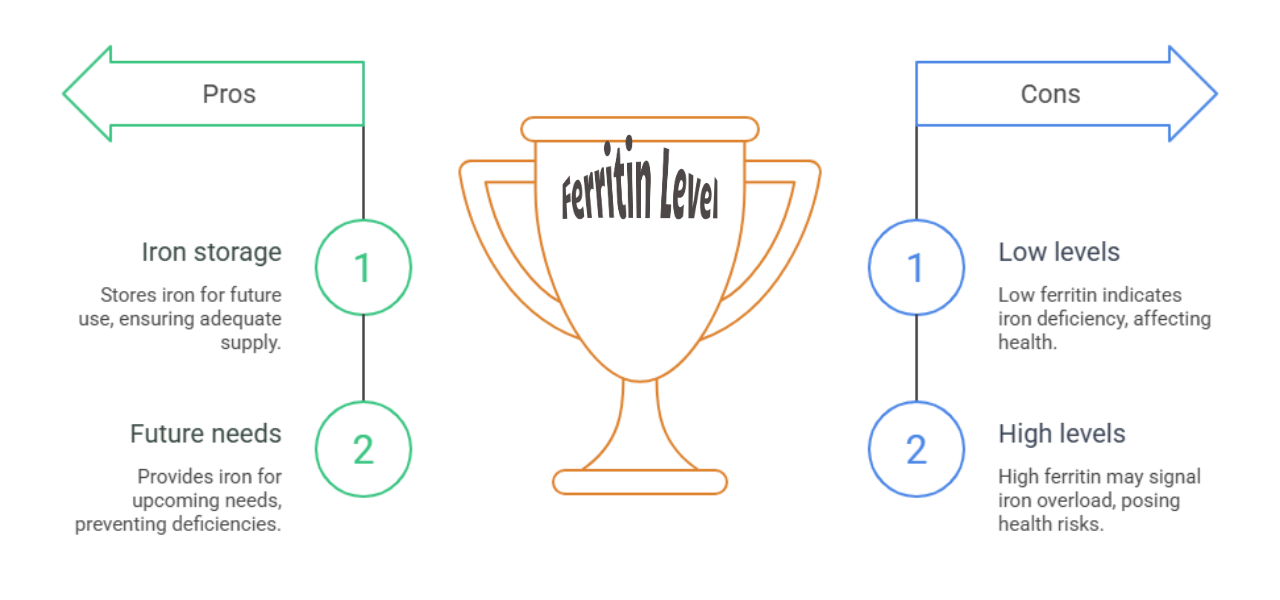
Ferritin is a protein that stores iron in your body. Think of it as your iron “reserve tank.”
While hemoglobin shows how much iron is circulating in your blood right now, ferritin tells us how much iron you have saved for future needs.
Ferritin vs Hemoglobin – Why Blood Tests Can Be Misleading
- Hemoglobin can appear normal even when iron stores are low
- Ferritin drops first, long before anemia develops
- Many women are symptomatic at ferritin levels below 30 µg/L
This is why women often hear, “Your iron is normal,” yet continue to feel unwell.
Why Women Are More Prone to Low Ferritin
Low ferritin is especially common among women due to:
- Regular menstrual blood loss
- Pregnancy and postpartum iron depletion
- Vegetarian or low-red-meat diets
- Endurance exercise and high physical stress
- Poor absorption from standard iron supplements
In Canada, pharmacists increasingly recommend targeted iron supplements for women rather than generic, high-dose formulas.
Low Ferritin Symptoms Women Should Never Ignore
Low ferritin symptoms are often subtle at first and frequently dismissed.
Common Physical Symptoms
- Persistent fatigue or weakness
- Hair shedding or thinning
- Pale or dry skin
- Cold hands and feet
- Shortness of breath with mild activity
Cognitive & Emotional Symptoms
- Brain fog and poor concentration
- Increased anxiety or low mood
- Reduced exercise tolerance
Importantly, these symptoms can appear before anemia develops, which is why ferritin-specific treatment matters more than simply taking iron pills randomly.
Why Not All Iron Supplements Work for Low Ferritin
Many women stop taking iron because of nausea, constipation, or stomach pain. Others take iron faithfully but see little improvement in ferritin levels.
Common reasons include:
- Poor absorption of standard ferrous sulfate
- Incorrect dosing frequency
- Taking iron with calcium, coffee, or food that blocks absorption
At Prosper Pharmacy, we regularly help women transition from ineffective iron pills for fatigue to better-absorbed, gentler options or customized compounded iron when OTC products fail.
How to Choose the Best Iron Supplement for Women With Low Ferritin
Choosing the best iron supplement for women with low ferritin isn’t about chasing the highest milligram number.
It’s about how much iron your body actually absorbs, how well you tolerate it, and whether it fits your daily routine. This is where many women go wrong and why results stall.
Elemental Iron Explained (Why the Label Matters More Than the Brand)
Iron supplements list a compound (like ferrous sulfate or iron bisglycinate), but what really matters is elemental iron, the amount your body can use.
| Iron Form | Typical Elemental Iron | Notes |
|---|---|---|
| Ferrous sulfate | ~65 mg | Effective but often harsh |
| Ferrous fumarate | ~33 mg | Moderate tolerance |
| Iron bisglycinate | ~25–36 mg | Gentle, better absorbed |
| Heme iron | ~10–12 mg | Highly absorbable |
Note: A lower dose that is well-absorbed often raises ferritin levels better than a high dose that causes side effects and poor compliance.
Heme Iron vs Non-Heme Iron: Which Is Better for Low Ferritin?
Heme iron and non-heme iron are the two main forms of dietary iron, differing primarily in their sources, absorption rates, and health impacts.
The main difference is the source and absorption efficiency.
Heme Iron (Animal): Found in meat, poultry, and fish. It is wrapped in a protein ring called “heme” that acts like a VIP pass, allowing it to cross easily into your bloodstream.
Non-Heme Iron (Plant): Found in greens, beans, nuts, and fortified grains. It lacks that protective ring, so your digestive system has to chemically alter it before it can be absorbed.
Quick Comparison
| Feature | Heme Iron | Non-Heme Iron |
|---|---|---|
| Source | Animal flesh (Red meat, chicken, seafood) | Plants (Spinach, lentils, tofu, cereals) |
| Absorption | High (15–35%) | Low (2–20%) |
| Stability | Rarely affected by other foods. | Sensitive: Easily blocked or boosted by other foods. |
For most women, a gentle non-heme option like iron bisglycinate offers the best balance of absorption and tolerance – especially in Canada, where availability matters.
Why Gentle Iron Supplements Are Often the Best Choice in Canada
When ferritin is low, consistency is everything. That’s why many pharmacists recommend the best iron supplement rather than traditional ferrous sulfate.
FERAPRO 150mg (Bob’s Iron Formula)
High-potency iron option that’s positioned as gentle on the stomach.
FeraMAX® Pd Therapeutic 150 Capsules
Popular polysaccharide-iron style capsule, often chosen for better tolerance.
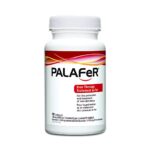
Palafer® Ferrous Fumarate 300 mg Capsules
A classic ferrous fumarate option—useful when you want a straightforward iron capsule.
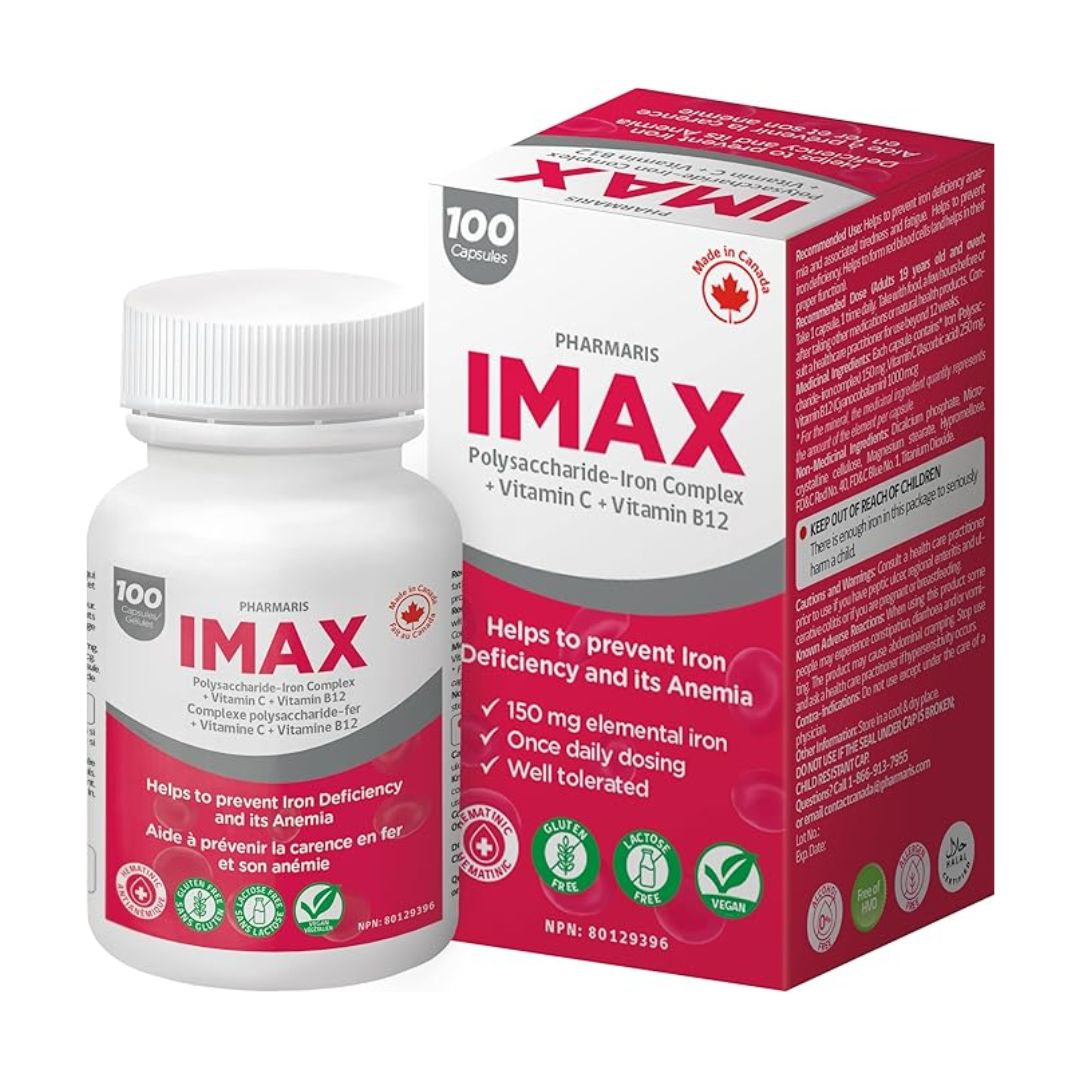
IMAX Iron Complex + Vitamin C + Vitamin B12
Polysaccharide iron with added vitamin C & B12—aimed at easier absorption and energy support.
If you’ve stopped iron in the past due to stomach pain, switching forms, not quitting, often solves the problem. Here is the Right Iron Supplement if You Have a Sensitive Stomach
Iron Pills for Fatigue | Why Energy Improves Before Ferritin
Many women notice improved energy within weeks of starting iron pills for fatigue, but blood tests lag behind.
Expected Results Timeline
- 2–3 weeks: Energy and breathlessness improve
- 6–8 weeks: Ferritin begins to rise measurably
- 3–6 months: Iron stores stabilize
This is why stopping early is one of the biggest mistakes we see in practice.
When Standard Iron Still Doesn’t Work
If ferritin remains low despite proper dosing and timing, causes may include:
- Poor gut absorption
- Heavy menstrual loss
- Chronic inflammation
- Intolerance to all OTC forms
In these cases, pharmacists may recommend custom-compounded iron with adjusted doses, combinations (iron + vitamin C), or alternative delivery forms.
Here is the perfect guide on how to know your iron pills are working.
Best Iron Supplements for Women in Canada (Pharmacist-Recommended Picks)
FERAPRO 150mg (Bob’s Iron Formula)
High-potency iron option that’s positioned as gentle on the stomach.
FeraMAX® Pd Therapeutic 150 Capsules
Popular polysaccharide-iron style capsule, often chosen for better tolerance.
Palafer® Ferrous Fumarate 300 mg Capsules
A classic ferrous fumarate option—useful when you want a straightforward iron capsule.
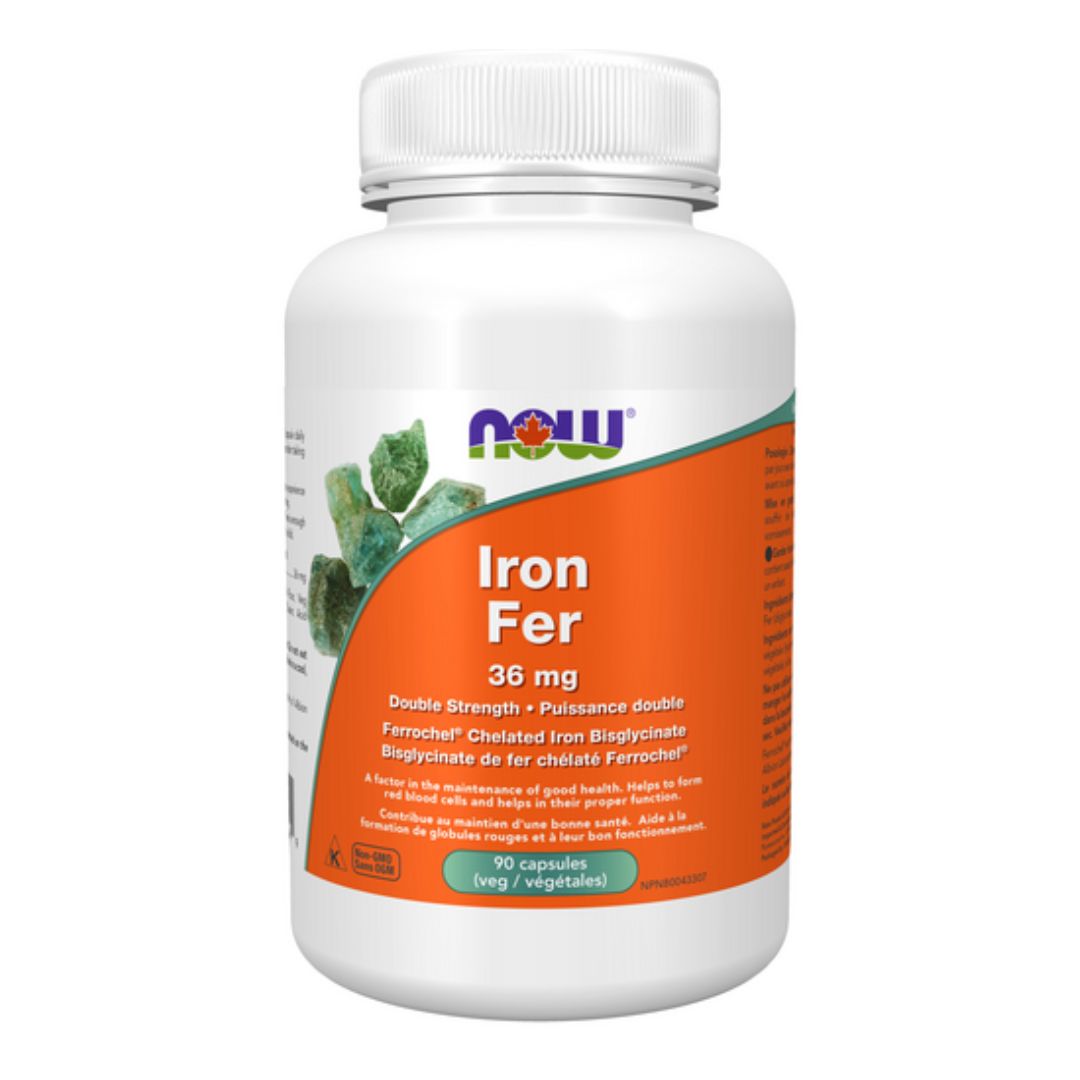
Iron Bisglycinate 36mg
Double-Strength Potency, Zero Stomach Pain. Restore Your Energy Without Wrecking Your Digestion.
When Compounded Iron Is the Better Option
Standard strengths don’t fit everyone. Compounded iron may be recommended when:
- You need a custom elemental iron dose
- Side effects persist even with gentle iron
- Combination formulas are needed (iron + vitamin C or B12)
- You require liquid or alternate capsule sizes
Custom compounding improves tolerance and adherence, two factors that matter more than the label strength. [Source]
Frequently Asked Questions
Can you have low ferritin without anemia?
Yes. This is extremely common in women. Ferritin drops before hemoglobin, which is why symptoms can exist despite “normal” blood work.
Is iron bisglycinate better than ferrous sulfate?
For most women, yes. Iron bisglycinate is gentler and better tolerated, making it easier to take consistently, key for rebuilding ferritin.
Should I take iron every day or every other day?
Both can work. Alternate-day dosing may improve absorption and reduce side effects for some women. This depends on dose and tolerance.
Can low ferritin cause hair loss in women?
Yes. Low ferritin is strongly associated with hair shedding and thinning, even without anemia.
How long should I stay on iron supplements?
Usually, 3–6 months after ferritin normalizes, depending on ongoing risk factors like heavy periods.
Conclusion
Low ferritin is one of the most overlooked causes of fatigue, hair loss, and brain fog in women. The solution isn’t stronger iron, it’s smarter iron.
By choosing the right form, optimizing absorption, and monitoring ferritin properly, most women can restore iron stores safely and feel like themselves again.
👉 Action step: If symptoms persist or ferritin remains low, speak with a pharmacist who understands iron beyond the label.