
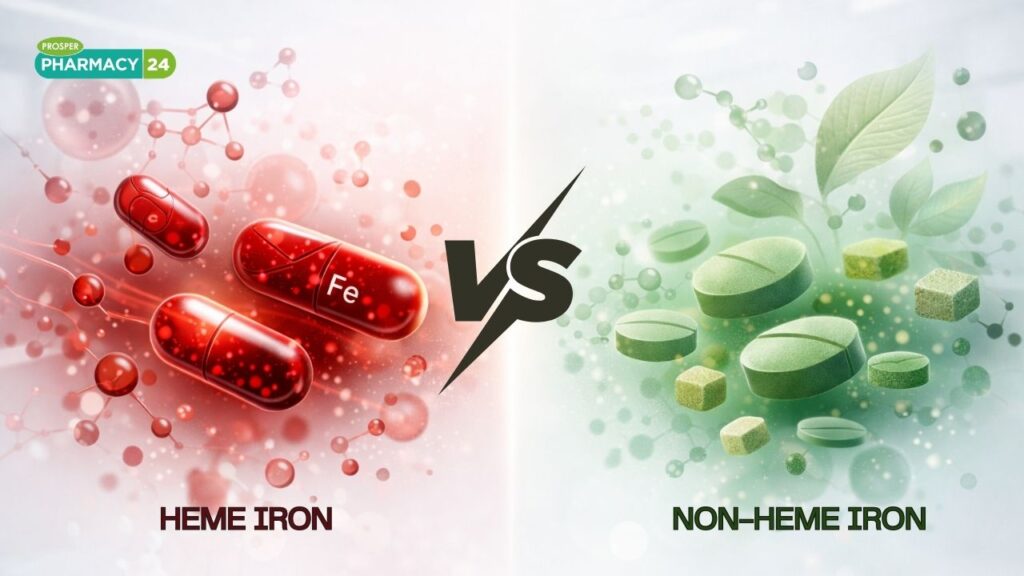
Iron deficiency is one of the most common nutritional deficiencies worldwide, and it doesn’t just affect energy levels.
It impacts concentration, immunity, and overall quality of life. For many patients, the real confusion starts after diagnosis: which iron supplement actually works best?
This is where the debate around heme vs non heme iron supplements becomes important.
While both raise iron levels, they behave very differently in the body. Understanding those differences can save you months of frustration, side effects, and poor results.
As pharmacists, we regularly see patients who are “taking iron” but not improving. The reason is rarely effort; it’s usually absorption, tolerability, or the wrong formulation.
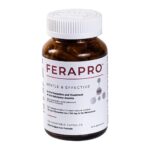
FERAPRO 150mg (Bob’s Iron Formula)
High-potency iron option that’s positioned as gentle on the stomach.
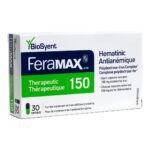
FeraMAX® Pd Therapeutic 150 Capsules
Popular polysaccharide-iron style capsule, often chosen for better tolerance.
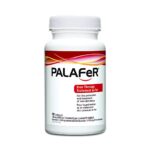
Palafer® Ferrous Fumarate 300 mg Capsules
A classic ferrous fumarate option—useful when you want a straightforward iron capsule.
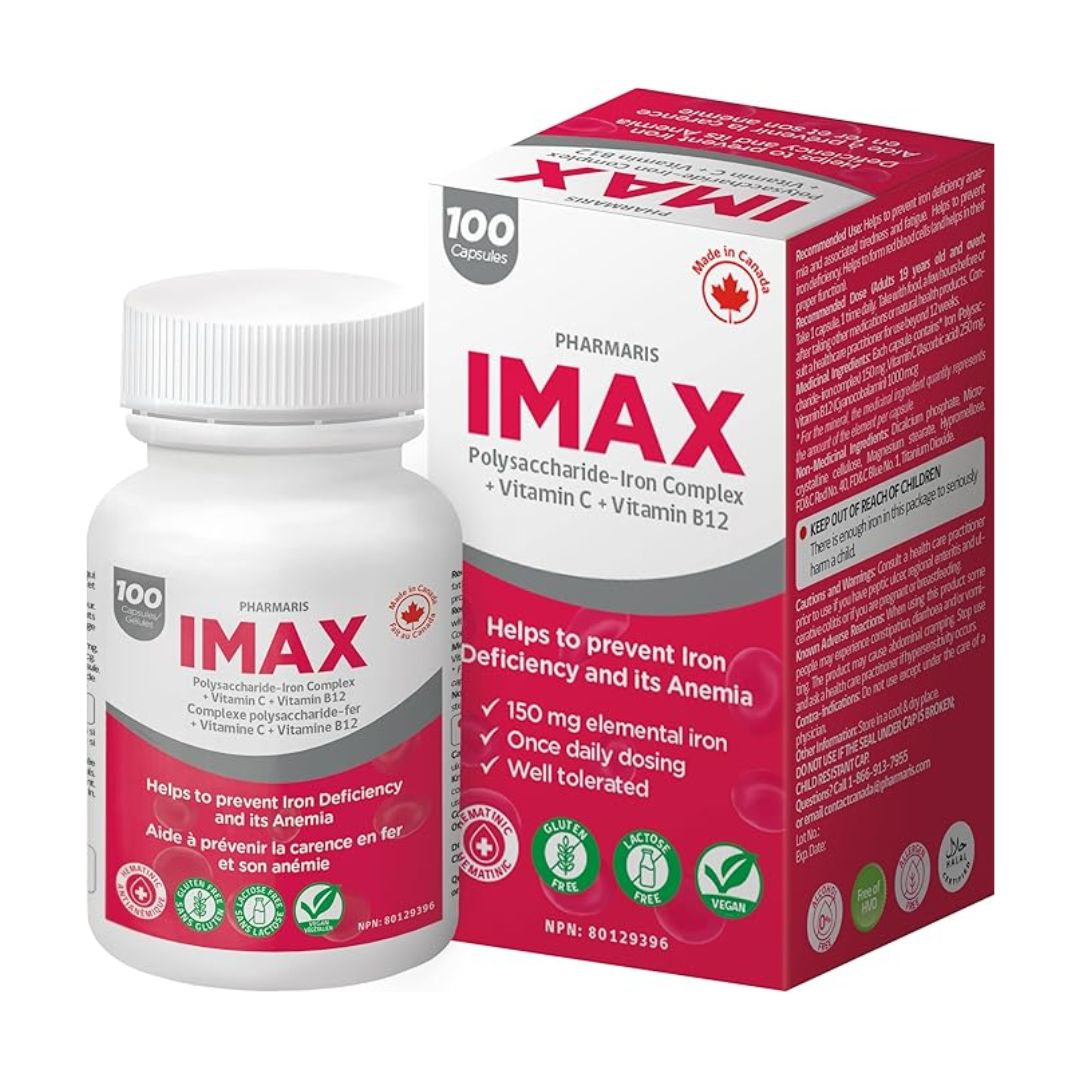
IMAX Iron Complex + Vitamin C + Vitamin B12
Polysaccharide iron with added vitamin C & B12—aimed at easier absorption and energy support.
What is Iron Deficiency
Iron is essential for making hemoglobin, the protein that carries oxygen in your blood. When iron levels drop, oxygen delivery drops too, leading to fatigue, weakness, and poor endurance.
According to the National Institutes of Health (NIH), iron deficiency remains the leading cause of anemia globally, and women of childbearing age are among the most affected groups (NIH, 2024).
In Canada, Health Canada also recognizes iron deficiency as a common nutritional concern, particularly among menstruating women, pregnant individuals, seniors, and people with restricted diets (Health Canada, 2023).
Why Iron Supplement Formulation Matters More Than Dose
Here’s a critical misconception: higher milligrams do not guarantee better results.
Iron supplements fail for three main reasons:
- Poor absorption
- Gastrointestinal side effects
- Low long-term compliance
This is where the comparison between heme vs non heme iron supplements becomes clinically meaningful.
- Some forms of iron are absorbed efficiently even at lower doses
- Others require higher doses but cause constipation, nausea, or stomach pain
- Food, coffee, calcium, and medications can dramatically interfere with absorption
Choosing the correct formulation upfront reduces side effects and improves outcomes, especially for patients who have already “failed” one iron product.
What Is Heme and Non-Heme Iron?
Before comparing iron supplements, it’s important to understand that not all iron is absorbed or tolerated in the same way.
Most treatment failures happen not because iron doesn’t work, but because the form of iron doesn’t match the patient’s absorption capacity, digestive tolerance, or daily routine.
Broadly, oral iron supplements fall into two categories: heme iron and non-heme iron. Each follows a different absorption pathway in the gut, responds differently to food and medications, and carries its own advantages and limitations.
Understanding how these two forms work individually is essential before deciding which option is more effective for treating iron deficiency.
Understanding Heme Iron
When patients ask why one iron supplement “works” while another causes nothing but stomach pain, the answer is often heme iron.
Heme iron is the form of iron naturally found in animal-based foods, and it behaves very differently in the body compared to standard iron tablets.
From a pharmacy perspective, this difference isn’t academic, it directly affects how quickly iron levels improve, how well patients tolerate treatment, and whether they stay consistent long enough to correct the deficiency.
Heme iron is iron bound to a heme molecule, the same structure found in hemoglobin and myoglobin.
Because the body already recognizes this form, it uses a specialized absorption pathway in the small intestine.
Non-Heme Iron Explained
Non-heme iron is the most common form of iron found in plant-based foods and conventional iron tablets, and it is what most people are taking when they say they are “on iron.”
It is widely available, cost-effective, and clinically effective when used correctly, but its performance is highly dependent on proper dosing and absorption conditions.
Unlike heme iron, non-heme iron is not bound to a heme molecule and must be converted into an absorbable form during digestion, making it far more sensitive to food, medications, stomach acidity, and timing.
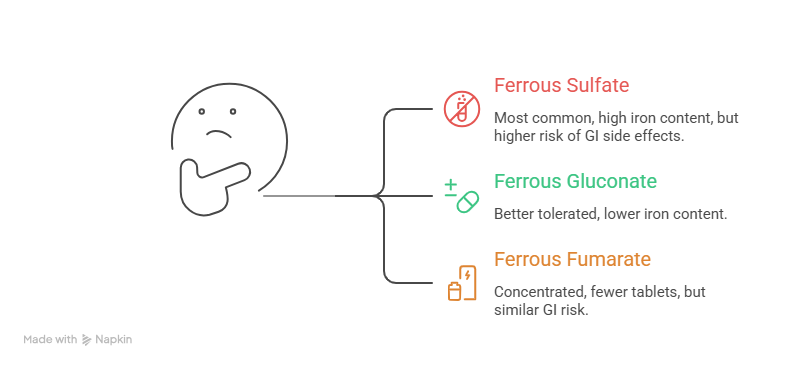
From a pharmacy perspective, the type matters just as much as the dose. Switching forms can sometimes solve side effects without changing the treatment plan.
Heme vs Non-Heme Iron Supplement | The Pharmacist’s Verdict
Let’s be direct. If a patient is iron-deficient and has already failed standard iron tablets, the problem is almost never motivation.
It’s absorption and tolerance.
This is exactly where the heme vs non heme iron supplement decision matters and where most online articles get it wrong by being vague.
For most patients with true iron deficiency, heme iron is more reliable than non-heme iron.
That doesn’t mean non-heme iron is useless.
It means non-heme iron only works well when conditions are ideal, and in real life, they rarely are.
Heme vs Non-Heme Iron Supplement
Question Patients Actually Care About |
Heme Iron |
Non-Heme Iron Tablets |
|---|---|---|
Does it absorb well? |
Yes — consistently |
Inconsistent |
Does food interfere? |
Minimal |
Major interference |
Does it cause constipation? |
Rare |
Common |
Does dose need to be high? |
No |
Often yes |
Does it work if stomach acid is low? |
Yes |
Often no |
Is it cheaper? |
No |
Yes |
Common Side Effects of Heme vs Non-Heme Iron Supplements
| Side Effect | Heme Iron | Non-Heme Iron |
|---|---|---|
| Constipation | Rare | Common |
| Nausea | Uncommon | Common, especially at higher doses |
| Stomach pain or cramping | Rare | Common |
| Bloating / gas | Rare | Moderate to common |
| Metallic taste | Very rare | Common |
| Dark stools | Possible but less noticeable | Very common |
| Heartburn or reflux | Rare | More likely |
| Treatment discontinuation due to side effects | Low | High |
| Tolerance with long-term use | Generally good | Often poor without dose adjustment |
Non-heme iron causes more gastrointestinal side effects because unabsorbed iron remains in the gut, irritating the intestinal lining, especially at higher doses.
Final Thought
At Prosper Pharmacy, patients often come to us after saying:
“I’ve been on iron for months and nothing changed.”
Most don’t need more iron.
They need the right form.
Choosing between heme vs non heme iron supplements is not about trends. It’s about absorption, tolerance, and finishing the treatment, not quitting halfway.
Before increasing your dose or giving up, speak with a pharmacist who understands iron therapy beyond the label.
About the Health Experts Meet the team behind this article

Written by: Prosper Pharmacy24 editorial team
The editorial team prepares general health and pharmacy-related content to help readers better understand topics such as medications, vaccinations, travel health, and everyday pharmacy care. Our content is developed with a patient-friendly approach and is intended for educational purposes only.

Medically reviewed by - Dr. Anant Mrar, R.Ph.
He is a registered pharmacist in British Columbia. He provides professional input on selected health content to help ensure the information is clear, practical, and consistent with commonly available pharmacy and public health guidance at the time of publication. This content is for general education and should not replace personalized advice from a pharmacist, physician, or other healthcare professional.