

If you’re searching for the best pain relief cream for knee arthritis, chances are your pain is localized, persistent, and interfering with daily movement.
Knee arthritis doesn’t usually hurt “all over” the body, it concentrates in one joint that bears weight, absorbs shock, and moves constantly.
That’s exactly why targeted, topical treatment often makes more sense than systemic pills.
From a pharmacist’s perspective, the goal isn’t just pain masking.
It’s reducing inflammation right where it starts, while minimizing whole-body side effects.
Understanding what’s happening inside the knee explains why creams, gels, and compounded topicals can be so effective.
What Happens Inside an Arthritic Knee?
Knee arthritis, most commonly osteoarthritis, develops when the protective cartilage between bones gradually wears down. As cushioning is lost, friction increases and the joint becomes inflamed.
Key changes inside the knee joint include:
- Cartilage breakdown
- Low-grade chronic inflammation
- Swelling of surrounding tissues
- Increased sensitivity of pain receptors
Because this process is localized, delivering medication directly to the knee joint is often both logical and efficient.
Why Knee Arthritis Pain Is Often Localized
Unlike nerve pain or inflammatory conditions that affect the whole body, knee arthritis pain typically:
- Worsens with movement or weight-bearing
- Improves with rest
- Feels concentrated around or behind the kneecap
- May flare on one side more than the other
This is why many people benefit from non-oral pain relief that acts directly at the site of inflammation instead of circulating through the entire body.
Why Topical Pain Relief Is Often Preferred for Knee Arthritis
For many people with knee arthritis, the smartest first step isn’t another pill, it’s targeted, non-oral pain relief.
Pharmacists increasingly recommend topical options because they address pain at the source while reducing the risks that come with long-term oral medications.
If you’re comparing options to find the best pain relief cream for knee arthritis, understanding why topicals are favored will help you choose confidently.
How Topical Pain Relievers Work
Topical arthritis products are applied directly to the skin over the knee. From there, active ingredients move into the underlying tissues where inflammation and pain signals originate.
What makes topicals different from pills:
- Medication concentrates around the joint
- Less drug circulates through the bloodstream
- Fewer whole-body side effects
This localized action is especially useful for knees, which sit close to the skin compared to deeper joints like hips.
Benefits of Non-Oral Pain Relief for Knee Arthritis
Topical therapies are often recommended first-line for mild to moderate knee osteoarthritis by organizations like the Arthritis Foundation because they balance effectiveness with safety.
Key advantages include:
- Lower risk of stomach irritation and ulcers
- Reduced impact on kidneys and heart
- Can be used alongside other treatments (with guidance)
- Suitable for longer-term use when used correctly
For many adults especially seniors, this safety profile matters as much as pain control.
Why the Knee Is Ideal for Topical Treatment
The knee joint responds particularly well to topical therapy because:
It’s relatively superficial
Inflammation is localized
Movement-related pain is predictable
This is why products like Voltaren gel for knee arthritis often perform better on knees than on deeper joints. The medication can penetrate tissues around the joint capsule and reduce inflammation where it counts.
Topical vs Oral Pain Relief | A Practical Comparison
| Feature | Topical Pain Relief | Oral Pain Relievers |
|---|---|---|
| Targeted action | Yes | No |
| Stomach risk | Low | Moderate–High |
| Kidney/heart risk | Low | Higher with long-term use |
| Suitable for daily use | Often | Depends on dose & health |
| Drug interactions | Fewer | More common |
This comparison highlights why many people prefer topical options as a first step before considering oral NSAIDs.
When Topicals Are a Better Choice Than Pills
Topical arthritis treatments are often preferred if you:
- Have stomach sensitivity or ulcers
- Take blood pressure or heart medications
- Need long-term pain management
- Want to avoid daily pills
- Experience pain in one or two specific joints
In these cases, a joint pain cream in Canada can offer meaningful relief with fewer trade-offs.
Setting Realistic Expectations
Topical treatments don’t numb pain instantly like injections, but they can deliver steady, functional relief.
Typical timeline:
- Initial relief: within a few days
- Maximum benefit: 1–2 weeks of consistent use
- Best results: with proper dosing and technique
Diclofenac Gel for Knee Arthritis | How It Compares to Other Topicals
When people ask pharmacists about the best pain relief cream for knee arthritis, one name comes up repeatedly: Voltaren®.
But it isn’t the only option, and it isn’t right for everyone. In this section, we’ll break down Voltaren gel for knee arthritis and compare it with other common arthritis pain ointment types so you can choose based on how your knee pain behaves, not just brand recognition.
What Is Voltaren Gel and Why It’s Different
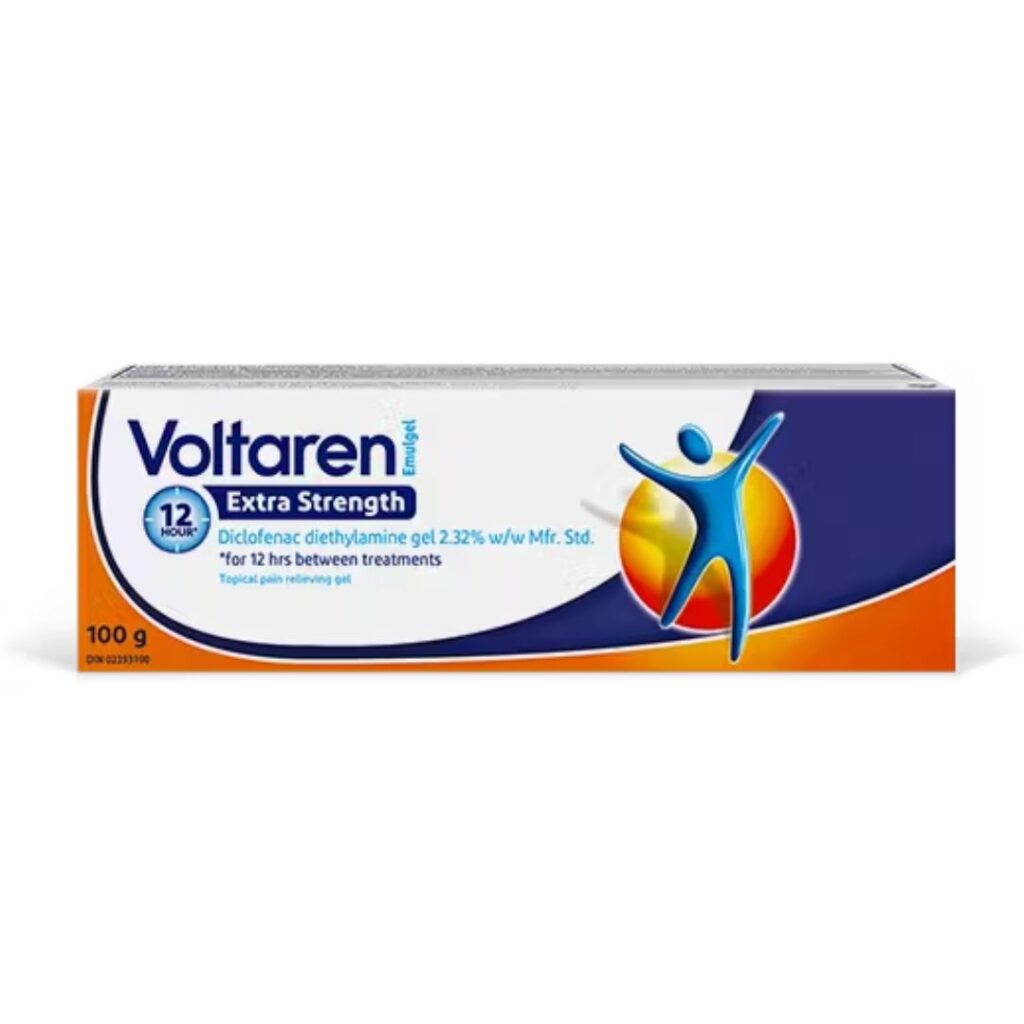
Voltaren® contains diclofenac, a non-steroidal anti-inflammatory drug (NSAID).
Unlike counterirritant creams that distract pain signals, diclofenac reduces inflammation at the joint.
- Why that matters for knee arthritis
- Osteoarthritis pain is driven by inflammation
- Reducing inflammation improves pain and movement
- Topical diclofenac concentrates around the knee with minimal bloodstream exposure
This mechanism is why many guidelines list topical NSAIDs as first-line therapy for knee osteoarthritis.
Who Voltaren Gel Works Best For
Voltaren gel is typically a good choice if you have:
- Mild to moderate knee arthritis
- Swelling or stiffness with activity
- Pain that worsens after walking or standing
- A need for non-oral pain relief due to stomach, kidney, or heart concerns
According to the Arthritis Foundation, topical NSAIDs like diclofenac are especially effective for knee and hand arthritis compared with deeper joints.
How Long Does Voltaren Take to Work?
Voltaren isn’t instant, but it’s reliable with consistent use.
Typical timeline
- Initial relief: 2–4 days
- Noticeable improvement: 1 week
- Maximum benefit: 2–3 weeks of regular use
Consistency matters more than applying extra amounts.
How Voltaren Compares to Other Arthritis Pain Ointments
Not all topicals treat pain the same way. Here’s how Voltaren stacks up against common alternatives available as OTC arthritis treatment options in Canada.
Topical Options for Knee Arthritis
| Type | Active Ingredient | Best For |
|---|---|---|
| Voltaren gel | Diclofenac | Inflammatory knee pain |
| Counterirritant creams | Menthol, camphor | Quick, short-term relief |
| Capsaicin creams | Capsaicin | Chronic nerve-like pain |
| Salicylate creams | Methyl salicylate | Mild aches |
| Combination creams | Mixed actives | Broader symptom relief |
When an Arthritis Pain Ointment May Be Enough
You may do well with non-NSAID ointments if:
- Pain is mild or occasional
- You want quick, temporary relief
- You can’t tolerate NSAIDs at all
These products are often used in between Voltaren doses or for short bursts of relief.
Safety Tips for Using Voltaren Gel
Voltaren is generally safe when used as directed, but technique matters.
- Apply to clean, intact skin only
- Wash hands after application
- Avoid combining with oral NSAIDs unless advised
- Don’t cover with heat or tight bandages
Side effects are usually mild and localized (dryness or rash)
OTC Options in Canada, Compounding Solutions, and How to Use Them Safely
By this point, you understand why topical treatments work so well for knee arthritis.
Now let’s focus on what’s available in Canada, when OTC products are enough, and when a compounding solution for arthritis pain becomes the smarter next step, plus how to use these treatments correctly for real relief.
OTC Arthritis Treatments Available in Canada
For many people, over-the-counter options are the first and most effective line of care.
Common OTC Topicals in Canada Include:
- Topical NSAIDs – Voltaren
- Counterirritant creams
- Capsaicin creams
- Salicylate-based ointments
These are widely used as OTC arthritis treatment options because they’re accessible, targeted, and generally safer than long-term oral pain medications.
When Compounding Solutions Make Sense for Arthritis Pain
Standard products don’t work for everyone. This is where compounding solution for arthritis pain becomes valuable.
Why Compounded Creams Are Different
Compounded topicals are customized by pharmacists and may combine multiple ingredients in one formulation, such as:
- Anti-inflammatory agents
- Muscle relaxants
- Nerve-modulating medications
- Local anesthetics
This approach targets multiple pain pathways at once, which is especially helpful in advanced or persistent knee arthritis.
Who Benefits Most from Compounded Arthritis Creams
- People who don’t respond to OTC products
- Those who can’t tolerate NSAIDs
- Patients with complex pain patterns
- Individuals needing tailored strengths or ingredient combinations
A compounding pharmacy can also adjust the base (cream, gel, ointment) to suit sensitive skin.
How to Use Joint Pain Creams Safely and Effectively
Even the right product won’t work if it’s used incorrectly.
Pharmacist-Approved Tips:
- Apply to clean, intact skin only
- Use the recommended amount (more is not better)
- Massage gently into the knee joint area
- Wash hands after application
- Avoid applying heat immediately after use
How Often Should You Apply?
Most OTC topicals: 2–4 times daily (check label)
Compounded creams: follow pharmacist instructions closely
People Also Ask
What is the best pain relief cream for knee arthritis?
The best option depends on symptoms, but topical NSAIDs like diclofenac are often first-line for inflammatory knee arthritis, with other creams used for additional relief.
Is Voltaren gel better than pills for knee arthritis?
For many people, yes. Voltaren provides localized relief with fewer systemic side effects than oral NSAIDs.
How often can I use arthritis creams?
Most OTC creams can be used multiple times daily as directed. Overuse doesn’t improve results and may irritate the skin.
Are topical arthritis treatments safer than oral ones?
Generally, yes, especially for long-term use, because less medication enters the bloodstream.
When should I consider a compounded arthritis cream?
If OTC products don’t control pain or cause side effects, a compounded topical may offer a personalized alternative.
Key Takeaways
The best pain relief cream for knee arthritis is one that targets inflammation locally, minimizes systemic side effects, and matches your pain severity, topical NSAIDs like diclofenac are often first-line in Canada, while other arthritis pain ointments and compounding solutions for arthritis pain are valuable when OTC options fall short; correct application, consistency, and pharmacist guidance make the biggest difference.
About the Health Experts Meet the team behind this article

Written by: Prosper Pharmacy24 editorial team
The editorial team prepares general health and pharmacy-related content to help readers better understand topics such as medications, vaccinations, travel health, and everyday pharmacy care. Our content is developed with a patient-friendly approach and is intended for educational purposes only.

Medically reviewed by - Dr. Anant Mrar, R.Ph.
He is a registered pharmacist in British Columbia. He provides professional input on selected health content to help ensure the information is clear, practical, and consistent with commonly available pharmacy and public health guidance at the time of publication. This content is for general education and should not replace personalized advice from a pharmacist, physician, or other healthcare professional.